
Indigenous Language Notice
This material was documented through engagement with Mro oral and written traditions.
While standardized scripts and knowledgeable language practitioners do exist, producing accurate, verified transcriptions requires trained contributors, time, and fair compensation. At this self-funded stage of the project, it has not been possible to undertake this work responsibly.
Roots and Rights Collective is committed to developing properly resourced, community-led, and consent-based transcription and archiving of indigenous languages in future phases of this initiative.
Shared Responsibilities: Gender Roles among the Mro
In the high ranges of Bandarban, the Mro people live in hamlets of bamboo houses clustered along forest slopes. Their lives, like those of many indigenous communities in the Chittagong Hill Tracts (CHT), are inseparable from the forest. Every daily task—whether gathering firewood, weaving cloth, tending pigs, or preparing a jhum field—depends on the resources of the hills and streams.
Among the Mro, work is not simply divided between men and women; it is shared, rotated, and balanced in ways that ensure survival. This pattern of gendered cooperation is not just about livelihood—it is about sustaining community, knowledge, and ecological balance.
Forest and Home: Women’s Daily Work
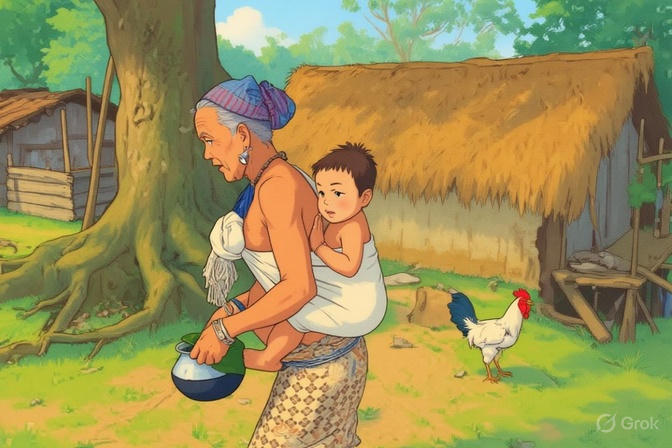
Mro women begin their day before sunrise. They pound rice in wooden mortars, light the chikua hearth, and cook the first meal. Water, carried in gourds slung in baskets, must be fetched twice daily from nearby streams. Firewood, too, is their responsibility. Women know which trees produce a quick flame for boiling, which burn slow for rice, and which species are best left untouched.
Beyond food and fuel, women are the keepers of textiles. Every Mro garment—wanclai, wancha, khabang, dong—is woven on the loin-loom. Cotton is ginned, spun, dyed, and woven entirely by women, often with daughters learning by their side. Finished cloth is sold in markets, carried in large tom baskets, where women manage both the trade and household economy.
They also raise pigs, which form a major part of Mro subsistence and ritual life. Feeding and guarding the animals is women’s daily duty, down to boiling rice bran into slop and standing watch to ensure the smaller pigs are not bullied by larger ones.
Men’s Labor: Building, Hunting, and Protection
Men, for their part, take on tasks requiring heavy labor or protection. They cut jungle for jhum fields, construct bamboo and wooden houses (kim-tam), and weave baskets of every size for carrying loads. From the bark of Sterculia villosa, men fashion straps to bind baskets across the back and forehead—tools indispensable for shifting cultivation.
Hunting is another male domain, serving both ritual and practical purposes. Men hunt deer and birds, but also protect crops from wild animals. Honey collection, too, falls to men: smoking hives, pressing comb, and refining beeswax used for weaving and sealing flutes.
Shared Spaces: Jhum and Ritual Life
The heart of Mro economy is shifting cultivation. Here, both men and women are essential. While only men clear the forest—a task bound by ancestral taboo—burning, planting, and sowing are done together. Weeding and mulching fall mainly to women, while harvesting is shared equally. Jhum is not just farming; it is an annual rhythm that binds the entire community in collective labor.
Festivals mirror this balance. The most important, the Cow-killing Ceremony (Chiya-Shod-Plai), marks the close of the agricultural year. Men prepare decorations and flutes for the ritual, while women brew rice wine. Sacrifice, music, and feasting renew social bonds and affirm the interdependence of both genders.
A Balance of Knowledge and Labor
What emerges from the Mro pattern is not inequality, but complementarity. Men and women contribute in different but equally vital ways. Men’s work may be more visible—construction, hunting, ritual authority—but women’s knowledge sustains the household and economy: weaving, food preparation, animal husbandry, and seed care.
This balance is echoed across indigenous societies. Among the Marma, women are central to weaving and poultry-rearing while men handle hunting and woodworking. In India’s Kendra communities, women contribute more than half of subsistence labor in food gathering. These parallels underline a truth: women’s labor, though often unacknowledged in mainstream development narratives, is indispensable to survival in forest economies.
For the Mro, gender is not a hierarchy but a shared responsibility. Women’s hands keep the household alive; men’s labor protects and builds. Together, they sustain a livelihood that depends entirely on the forest.
Recognizing this balance is crucial for any effort to support indigenous livelihoods. Development programs must not overlook women’s roles in subsistence, seed preservation, and ecological knowledge. To understand the Mro—and to safeguard their future—we must see gender not as division, but as cooperation rooted in forest, culture, and community.
অংশীদারিত্বের ভারসাম্য: ম্রো সমাজে নারী-পুরুষের ভূমিকা
বান্দরবানের উচ্চ পার্বত্য অঞ্চলে ম্রো জনগোষ্ঠী বাঁশের তৈরি ছোট ছোট গৃহসমষ্টিতে বসবাস করে, যা পাহাড়ের ঢালুতে গুচ্ছাকারে ছড়িয়ে আছে। চট্টগ্রাম পার্বত্য অঞ্চলের অন্যান্য আদিবাসী জনগোষ্ঠীর মতোই ম্রোদের জীবনও বন ও প্রকৃতির সঙ্গে অবিচ্ছেদ্যভাবে জড়িত। প্রতিদিনের প্রতিটি কাজ—হোক তা জ্বালানি কাঠ সংগ্রহ, বস্ত্র বোনা, শূকর পালন, কিংবা জুমক্ষেত প্রস্তুত করা—সবকিছুই পাহাড় ও ঝরনার সম্পদের উপর নির্ভরশীল।
ম্রো সমাজে কাজ কেবল নারী ও পুরুষের মধ্যে ভাগ করা নয়, বরং তা একধরনের পারস্পরিক সহযোগিতা, বিনিময় ও ভারসাম্যের কাঠামোয় গঠিত। এই সহযোগিতামূলক শ্রমবণ্টন শুধু জীবিকা নির্বাহের উপায় নয়—এটি সমাজ টিকিয়ে রাখার, জ্ঞান সংরক্ষণের এবং পরিবেশের ভারসাম্য রক্ষার একটি রীতি।
বন ও গৃহ: নারীর দৈনন্দিন শ্রম
ম্রো নারীদের দিন শুরু হয় সূর্য ওঠার আগেই। তারা কাঠের খোঁয়াড়ে ধান কলে পিষে, চিকুয়া চুলা জ্বালিয়ে সকালের খাবার প্রস্তুত করে। প্রতিদিন দু’বার কাছের ঝরনা থেকে লাউ বা বাঁশের তৈরি পাত্রে পানি আনতে হয়—এটিও নারীর দায়িত্ব। তেমনি জ্বালানি কাঠ সংগ্রহও তাদের কাজ। তারা জানে কোন গাছের কাঠ দ্রুত আগুন ধরে, কোনটি ধীরে জ্বলে ভাত রান্নার উপযোগী, আর কোন প্রজাতির গাছ সংরক্ষণযোগ্য।
খাদ্য ও জ্বালানির বাইরে নারীরা বস্ত্রকলার ধারক। প্রতিটি ঐতিহ্যবাহী ম্রো পোশাক—ওয়ানক্লাই, ওয়ানকং, তাপুং, দং—নারীদের হাতেই বোনা হয়। তুলা কাটা, সুতা কাটা, রঙ করা এবং তাঁতে বোনা—সব ধাপই নারীর কাজ। কিশোরীরা মায়ের পাশে বসে শেখে এই কলা। প্রস্তুত কাপড় বড় বাঁশের ঝুড়িতে ভরে হাটে বিক্রি করতে নারীরাই যায় এবং গৃহস্থালির অর্থনীতিও তারাই পরিচালনা করে।
তারা শূকরও পালন করে—যা ম্রোদের খাদ্য ও আচারজীবনের একটি বড় অংশ। ছোট থেকে বড় শূকরদের খাওয়ানো, পাহারা দেওয়া, চালের খুদ সেদ্ধ করে খাবার তৈরি করা—সবই নারীর দৈনন্দিন দায়িত্ব। তারা লক্ষ্য রাখে যাতে বড় শূকর ছোটদের মারধর না করে বা খাবার কেড়ে না নেয়।
পুরুষের কাজ: নির্মাণ, শিকার ও সুরক্ষা
পুরুষরা মূলত ভারী পরিশ্রমের কাজ ও সুরক্ষাসংক্রান্ত দায়িত্ব পালন করে। তারা জুমচাষের জন্য বন পরিষ্কার করে, বাঁশ ও কাঠের ঘর (কিম-তাম) তৈরি করে, এবং নানান আকারের ঝুড়ি ও পাত্র বোনে যা ভার বহনের জন্য ব্যবহৃত হয়। উদাল (sterculia villosa) গাছের ছাল থেকে তারা মজবুত বেল্ট তৈরি করে, যা পিঠ ও কপালে বেঁধে বোঝা বহনে সাহায্য করে—জুমচাষে অপরিহার্য এক উপকরণ।
শিকার পুরুষদের অন্যতম প্রধান কাজ—যার মধ্যে রয়েছে আচারিক ও ব্যবহারিক উভয় দিক। তারা হরিণ ও পাখি শিকার করে, আবার বন্যপ্রাণীর আক্রমণ থেকে ক্ষেতের ফসলও রক্ষা করে। মধু সংগ্রহও পুরুষদের কাজ: ধোঁয়া দিয়ে মৌচাক শান্ত করা, মধু চিপে সংগ্রহ করা এবং মৌমাছির মোম প্রক্রিয়াজাত করা, যা তাঁতে বোনা ও বাঁশের বাঁশি সিল করতে ব্যবহৃত হয়।
যৌথ ক্ষেত্র: জুমচাষ ও আচারজীবন
ম্রো অর্থনীতির প্রাণকেন্দ্র হলো জুমচাষ। এখানে নারী ও পুরুষ উভয়েই অপরিহার্য ভূমিকা পালন করে। বন পরিষ্কারের কাজ কেবল পুরুষরা করে—এটি এক প্রাচীন গোত্রনিয়মে বাঁধা। তবে জমি পোড়ানো, বীজ রোপণ ও রোপণের পরবর্তী পরিচর্যার কাজে নারী-পুরুষ একসঙ্গে অংশ নেয়। আগাছা পরিষ্কার ও মাটিচাপা দেওয়ার কাজ প্রধানত নারীরা করে, আর ফসল তোলা হয় সমানভাবে ভাগাভাগি করে। জুমচাষ শুধু কৃষিকাজ নয়, এটি একটি বাৎসরিক সামাজিক ছন্দ, যা পুরো সম্প্রদায়কে সমবেত শ্রমের বন্ধনে যুক্ত করে।
উৎসবগুলোতেও এই ভারসাম্যের প্রতিফলন দেখা যায়। সবচেয়ে গুরুত্বপূর্ণ উৎসব হলো গরু বলি উৎসব (চিয়াসদ-প্লাই), যা কৃষি বছরের সমাপ্তি নির্দেশ করে। পুরুষরা এই উৎসবে বাঁশি ও অলংকার তৈরি করে, আর নারীরা চালের মদ (আরাক) প্রস্তুত করে। বলিদান, সঙ্গীত ও ভোজের মাধ্যমে সমাজের বন্ধন নবায়িত হয় এবং নারী-পুরুষের পারস্পরিক নির্ভরতা পুনর্নিশ্চিত হয়।
জ্ঞান ও শ্রমের ভারসাম্য
ম্রো সমাজে যে শ্রমবিন্যাস দেখা যায়, তা অসমতার নয়—বরং পরিপূরকতার। নারী ও পুরুষ উভয়ে ভিন্ন ভিন্ন উপায়ে সমান গুরুত্বপূর্ণ অবদান রাখে। পুরুষদের কাজ দৃশ্যমান—ঘর নির্মাণ, শিকার, আচারিক নেতৃত্ব—কিন্তু নারীর জ্ঞান গৃহস্থালি ও অর্থনীতির ভিত্তি গঠন করে: তাঁত বোনা, খাদ্য প্রস্তুত, পশুপালন, বীজ সংরক্ষণ ইত্যাদি।
এই ভারসাম্য কেবল ম্রো সমাজেই নয়, অন্যান্য আদিবাসী জনগোষ্ঠীতেও দেখা যায়। যেমন মারমা সমাজে নারীরা বয়ন ও হাঁস-মুরগি পালনের মূল ভূমিকা পালন করে, পুরুষরা করে কাঠের কাজ ও শিকার। ভারতের কেন্দ্রা সম্প্রদায়ে নারীরা খাদ্যসংগ্রহ ও জীবিকার অর্ধেকেরও বেশি শ্রম দেয়। এসব উদাহরণ একটি সত্য তুলে ধরে—মূলধারার উন্নয়ন আলোচনায় প্রায়ই নারীর শ্রম অদৃশ্য থাকে, অথচ বননির্ভর জীবনে তাদের অবদান অপরিহার্য।
ম্রো সমাজে লিঙ্গ কোনো শ্রেণিবিন্যাস নয়, বরং সহযোগিতার দায়িত্ব ভাগাভাগি। নারীর পরিশ্রমে গৃহ টিকে থাকে, পুরুষের শ্রমে তা রক্ষা ও গঠিত হয়। একসঙ্গে তারা গড়ে তোলে এমন এক জীবিকা, যা পুরোপুরি বন ও প্রকৃতির ওপর নির্ভরশীল।
ম্রো সমাজকে বুঝতে এবং তাদের ভবিষ্যৎ সুরক্ষিত রাখতে হলে, লিঙ্গকে বিভাজন নয় বরং সহযোগিতার কাঠামো হিসেবে দেখা জরুরি। উন্নয়নমূলক উদ্যোগগুলোতে নারীদের ভূমিকা—খাদ্যসংগ্রহ, বীজ সংরক্ষণ, ও পরিবেশগত জ্ঞানে—স্বীকৃতি দিতে হবে। কারণ ম্রো জীবনের মূলতত্ত্বই হলো এই পারস্পরিক ভারসাম্য—যেখানে নারী ও পুরুষ উভয়ে একত্রে প্রকৃতি, সংস্কৃতি ও সমাজকে টিকিয়ে রাখে।