Indigenous Language Notice
This material was documented through engagement with Mro oral and written traditions.
While standardized scripts and knowledgeable language practitioners do exist, producing accurate, verified transcriptions requires trained contributors, time, and fair compensation. At this self-funded stage of the project, it has not been possible to undertake this work responsibly.
Roots and Rights Collective is committed to developing properly resourced, community-led, and consent-based transcription and archiving of indigenous languages in future phases of this initiative.
Mro Folktale — The Hunt for the Sun
Long, long ago, in a village nestled deep in the hills, lived twin brothers—Mum and Mia. They were wild and reckless by nature. They listened to no one, feared nothing, and caused trouble wherever they went. They snatched toys from other children, tormented animals, and beat down fruit from trees with sticks just for fun.
They had no parents. Their father had died one scorching summer afternoon, burnt by the blazing heat while out hunting. Their mother died giving birth to them, her last breath taken under the same cruel sun.
They were raised by their grandmother, a tired old woman who could barely keep them in check. But the boys paid her no mind.
One day, after they had beaten a village boy for no reason, the child’s father stormed to the grandmother’s hut, hurling curses. Humiliated, the old woman muttered under her breath,
“It’s your wild hearts that orphaned you.”
The twins froze.
“Who killed our parents, Grandma?” they asked.
With a long sigh, she replied,
“The Sun ate them. Its fire burned your father. Its heat drained the last breath from your mother. It was the Sun.”
The brothers said nothing. But their eyes blazed with fury. That night, under the pale moon, they made a vow:
“We will not return to this village until we have punished the Sun.”
They forged a cage of iron. They crafted swords, bows, and arrows. They gathered sticky tree sap from the banyan and fig trees. And then they journeyed east—toward the mountain pass where the Sun first enters the sky each day.
They waited in the darkness. First came the Evening Star. Then the Moon. Then the Morning Star, whispering:
“The Sun is coming.”
At last, golden light spilled over the peaks.
The Sun approached, riding its fiery chariot.
Mum shouted,
“Are you the Sun?”
“I am,” said the Sun. “King of the heavens.”
Mia declared,
“Then step into the cage! You burned our father. You stole our mother!”
The Sun, startled and ashamed, stepped inside.
The cage slammed shut.
The twins hurled hot sap onto the Sun’s burning skin.
Mum struck with his sword.
Mia shot an arrow deep into its heart.
The Sun howled in pain.
“Oh twins of fire, forgive me! I don’t want to be the Sun anymore. Let me become the Moon—cool and gentle. Let the Moon take my place as the Sun.”
The brothers said,
“So be it. But there is a price. Every day, at dawn, you must send us a basket of eggs. Red eggs for Mum. White eggs for Mia.”
The stars gathered. The planets bore witness.
A verdict was declared.
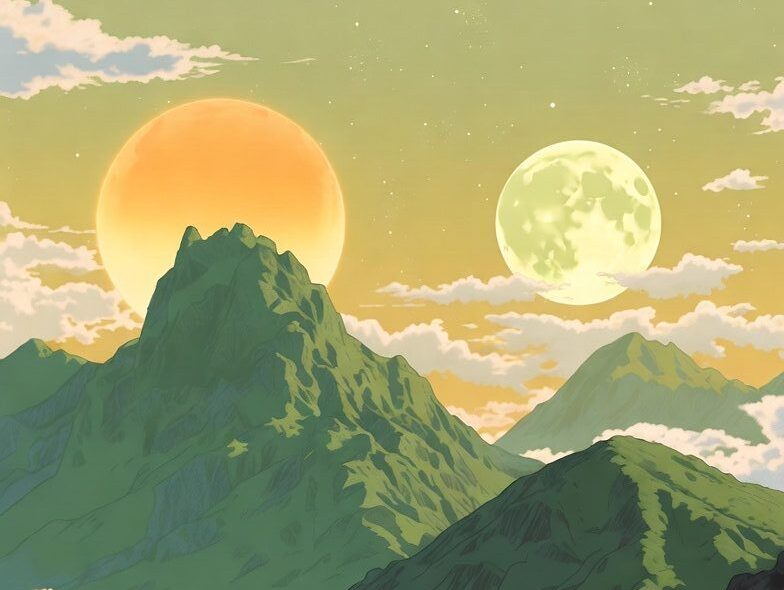
The Sun became the Moon.
The Moon became the Sun.
And from that day forward, the Mro people say—
When the Sun rises, its light turns red, for it brings Mum his red eggs.
When the Moon glows white, it sends Mia his gift.
It is the debt they owe—the price for burning their parents.
ম্রো রূপকথা — সূর্য শিকার
অনেক দিন আগের কথা। পাহাড়ে এক গাঁয়ে থাকত যমজ দুই ভাই—মুম আর মিয়া। তারা ছিলো অবাধ্য, দুরন্ত আর উগ্র স্বভাবের। কারও কথা শুনতো না, কারও পরোয়া করতো না। গ্রামের ছেলে-মেয়েদের খেলনা ছিনিয়ে নিত, পশুপাখিদের কষ্ট দিত, গাছে ফল দেখলেই লাঠি দিয়ে পেড়ে ফেলতো।
তাদের মা-বাবা ছিলো না। গ্রীষ্মের এক দুপুরে শিকারে গিয়ে বাবা মারা গিয়েছিলো সূর্যের প্রচণ্ড তাপে। আর মা, যখন ওদের জন্ম দিলেন, তখনই শেষ নিঃশ্বাস ফেললেন। ওদের মানুষ করেছিলো বুড়ি দাদীমা। কিন্তু দাদীর কথাও তারা শুনতো না।
একদিন গ্রামের এক ছেলে মুম আর মিয়ার মারধরে কেঁদে উঠলো। তার বাবার রাগ গিয়ে পড়ল বুড়ি দাদীর ওপর। অপমান সহ্য করতে না পেরে বুড়ি মুখে বলে ফেললো—
“তোমাদের এই দুরন্ত স্বভাবের কারণেই তোমরা মা-বাবাকে হারিয়েছো!”
ভাই দু’জন বিস্ময়ে প্রশ্ন করলো, “আমাদের মা-বাবাকে কে মেরেছে দাদী?”
দাদী দীর্ঘশ্বাস ফেলে বললেন, “তোমাদের মা-বাবাকে খেয়েছে সূর্য। তীব্র উত্তাপে পুড়ে মরেছিলো তোমাদের বাবা। আর মা গ্রীষ্মের রৌদ্রে সন্তান জন্ম দিয়ে প্রাণ হারায়।”
এই কথা শুনে মুম আর মিয়ার চোখ জ্বলে উঠলো। তারা প্রতিজ্ঞা করলো—
“সূর্য দেবতাকে শাস্তি না দিয়ে আমরা গ্রামে ফিরবো না।”
তারা লোহার খাঁচা বানালো। তলোয়ার, তীর-ধনুক আর গাছের আঠালো কষ নিয়ে সূর্যোদয়ের পথের দিকে রওনা হলো। অনেক বন পেরিয়ে দুই পাহাড়ের মাঝের সূর্য-সুরঙ্গে পৌঁছলো তারা। ওখানেই বসালো লোহার ফাঁদ।
রাতভর তারা পাহারা দিলো। প্রথমে এল সন্ধ্যাতারা, তারপর চাঁদ, তারপর শুকতারা—সবাই বললো, “সূর্য আসছে।”
ভোরের আলো ফুটতেই সূর্য আগুন রঙা রথে করে এগিয়ে এলো।
মুম চিৎকার করে বলল, “তুমি কি সূর্য?”
সূর্য বলল, “হ্যাঁ, আমি সূর্য। সৌরমণ্ডলের রাজা।”
মিয়া বলল, “তাহলে ঢুকো খাঁচায়! আমাদের মা-বাবাকে খেয়েছো তুমি!”
সূর্য বাধ্য হয়ে ঢুকলো।
খাঁচার দরজা বন্ধ!
বট ও অশ্বথ গাছের কষ ছোঁড়া হলো সূর্যের শরীরে।
মুম তার তলোয়ার দিয়ে সূর্যের গায়ে খোঁচা দিলো,
মিয়া তীর ছুঁড়লো বুকের ভেতর।
সূর্য ছটফট করতে করতে বলল—
“ও যমজ সন্তান! আমাকে মাফ করো! আমি সূর্য হতে চাই না। আমি হয়ে যাবো চাঁদ—শীতল, শান্ত। আর চাঁদ হয়ে যাবে সূর্য।”
তাদের বলা হলো—
“তা হবে, তবে শর্ত আছে। প্রতিদিন সূর্য উঠবার সময়, তোমরা আমাদের জন্য একটি ঝুড়ি করে ডিম পাঠাবে। লাল ডিম মুমের জন্য, সাদা ডিম মিয়ার জন্য।”
সব তারা, গ্রহ-নক্ষত্র একত্র হলো।
বিচার হলো।
সূর্য হয়ে গেলো চাঁদ।
চাঁদ হয়ে গেলো সূর্য।
আর তখন থেকেই পাহাড়ি ম্রোরা বলে—
ভোর হলে সূর্যের সঙ্গে ডিমের রঙ লাল হয়, আর চাঁদের আলোয় দেখা যায় সাদা ছায়া।
সে হলো মুম আর মিয়ার দান।
প্রতিদিন তারা সূর্য আর চাঁদের কাছ থেকে আদায় করে নেয় তাদের মা-বাবার রক্তের দেনা।