
Indigenous Language Notice
This material was documented through engagement with Mro oral and written traditions.
While standardized scripts and knowledgeable language practitioners do exist, producing accurate, verified transcriptions requires trained contributors, time, and fair compensation. At this self-funded stage of the project, it has not been possible to undertake this work responsibly.
Roots and Rights Collective is committed to developing properly resourced, community-led, and consent-based transcription and archiving of indigenous languages in future phases of this initiative.
Language and Script of the Mro People: A Study in Indigenous Linguistic Innovation
The Mro people of the Chittagong Hill Tracts (CHT) in southeastern Bangladesh possess a distinctive language and writing system that embodies their cultural identity and historical resilience. Historically transmitted through oral tradition, the Mro language is marked by grammatical richness and complexity. Scholarly attention to this language can be traced back to G.A. Grierson’s Linguistic Survey of India (1903), where he classified Mro under the Burmese branch of the Tibeto-Burman family. Grierson noted that while Mro largely follows the phonetic system of Burmese, it also presents striking affinities with Kuki-Chin, Bodo, and Naga languages, leading him to describe it as “a puzzling language in many respects.” Beyond its linguistic structure, the Mro language gained renewed significance with the creation of a script by a cultural reformer, a development that has played a key role in efforts of linguistic revitalization in the face of historical marginalization.
This early classification was based largely on phonetic resemblance, particularly in pronunciation and vocabulary. However, contemporary linguistic analysis suggests that Mro is more closely aligned with the Kuki-Chin subgroup of the Tibeto-Burman languages, particularly in verb formation and grammatical structure.
The Invention of the Mro Alphabet
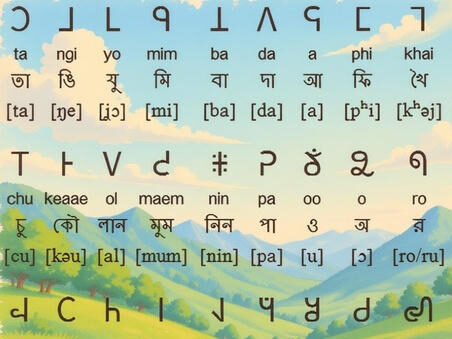
For centuries, the Mro people had no written script. Their language was preserved entirely through oral transmission. Recognizing the threat of language loss and cultural erosion, a legendary Mro spiritual leader, Menle Mro (also known as Kramadi), invented a distinct Mro alphabet in 1985–86. This script, now called the Mro script, contains 31 letters and bears some visual resemblance to Roman, Burmese, Thai, and Chinese characters.
Alongside the creation of the alphabet, Menle Mro founded a new indigenous spiritual belief system known as Krama. He did not stop with religious reform and alphabet creation. Menle authored religious texts, poetry, songs, and plays—all in the newly developed Mro script—establishing a written cultural corpus for his community.
On August 15, 1986, Menle Mro disappeared into the forest for spiritual retreat. Before his departure, he entrusted his disciples with the preservation and propagation of the Mro language, script, and religious doctrine. He handed over manuscripts containing social, familial, legal, and medicinal guidelines—all written in the Mro language—and instructed his followers to continue the mission of cultural preservation.
The Mro language, script, and grammar are foundational elements of Mro identity and cultural continuity. The invention of the Mro script by Menle Mro in the 1980s marked a turning point in the community’s linguistic history, enabling written literature, spiritual documentation, and formal education in the native tongue. Today, the Mro language stands as a living testament to indigenous resilience, self-determination, and the unbreakable link between language and land.
ম্রো জনগোষ্ঠীর ভাষা ও লিপি: এক আদিবাসী ভাষাগত উদ্ভাবনের ইতিহাস
চট্টগ্রাম পার্বত্য জেলার দক্ষিণ-পূর্বাঞ্চলে বসবাসরত ম্রো জনগোষ্ঠী তাদের নিজস্ব ভাষা ও লিপির মাধ্যমে এক স্বতন্ত্র সাংস্কৃতিক পরিচয় ও ঐতিহাসিক স্থিতিস্থাপকতার প্রতীক হয়ে উঠেছে। প্রজন্ম থেকে প্রজন্মে মৌখিকভাবে প্রচলিত এই ভাষা ব্যাকরণগতভাবে সমৃদ্ধ ও জটিল। ম্রো ভাষা নিয়ে প্রথম গবেষণামূলক মনোযোগ দেখা যায় জি. এ. গ্রিয়ারসনের Linguistic Survey of India (১৯০৩) গ্রন্থে, যেখানে তিনি ম্রো ভাষাকে তিব্বত-বর্মী ভাষাগোষ্ঠীর বর্মী শাখার অন্তর্ভুক্ত করেছেন। গ্রিয়ারসন লক্ষ্য করেছিলেন যে ম্রো ভাষা উচ্চারণ ও শব্দভাণ্ডারের দিক থেকে বর্মী ভাষার সাথে ঘনিষ্ঠ, তবে এর মধ্যে কুকি-চিন, বডো ও নাগা ভাষারও মিল পাওয়া যায়। তিনি একে “অনেক দিক থেকেই রহস্যময় এক ভাষা” বলে অভিহিত করেছিলেন। ভাষার এই কাঠামোগত বৈশিষ্ট্যের বাইরে, ম্রো ভাষা নতুন করে গুরুত্ব লাভ করে যখন এক সংস্কারক নেতা এর জন্য স্বতন্ত্র এক লিপি আবিষ্কার করেন—যা ইতিহাসের অবহেলা ও সাংস্কৃতিক বিলুপ্তির মুখে ভাষার পুনর্জাগরণে এক গুরুত্বপূর্ণ ভূমিকা রাখে।
গ্রিয়ারসনের শ্রেণিবিন্যাস মূলত ধ্বনিগত সাদৃশ্যের উপর ভিত্তি করে ছিল—বিশেষত উচ্চারণ ও শব্দভাণ্ডারে। তবে আধুনিক ভাষাবিদদের মতে, ম্রো ভাষা তিব্বত-বর্মী পরিবারের কুকি-চিন উপগোষ্ঠীর সাথে অধিক ঘনিষ্ঠ, বিশেষত ক্রিয়াপদ গঠন ও ব্যাকরণ কাঠামোর ক্ষেত্রে।
ম্রো লিপির উদ্ভাবন
শতাব্দীর পর শতাব্দী ধরে ম্রো জনগোষ্ঠীর কোনো লিখিত লিপি ছিল না। তাদের ভাষা সম্পূর্ণভাবে মৌখিক ঐতিহ্যের মাধ্যমে টিকে ছিল। ভাষা হারিয়ে যাওয়ার আশঙ্কা ও সাংস্কৃতিক অবক্ষয়ের মুখে, এক কিংবদন্তি ম্রো আধ্যাত্মিক নেতা মেনলে ম্রো (অন্য নাম ক্রামাদি) ১৯৮৫–৮৬ সালে এক স্বতন্ত্র ম্রো বর্ণমালা আবিষ্কার করেন। এই লিপিতে মোট ৩১টি অক্ষর রয়েছে, যার আকারে রোমান, বর্মী, থাই ও চীনা অক্ষরের আভাস মেলে।
লিপি সৃষ্টির পাশাপাশি মেনলে ম্রো ক্রামা নামে এক নতুন আদিবাসী আধ্যাত্মিক বিশ্বাসব্যবস্থারও প্রবর্তন করেন। তিনি শুধু ধর্মীয় সংস্কারেই থেমে থাকেননি; নতুন লিপিতে তিনি ধর্মীয় পুস্তক, কবিতা, গান ও নাটক রচনা করেন—যার মাধ্যমে ম্রো সম্প্রদায়ের জন্য এক লিখিত সাহিত্যভাণ্ডারের ভিত্তি স্থাপন করেন।
১৯৮৬ সালের ১৫ আগস্ট মেনলে ম্রো আধ্যাত্মিক সাধনার উদ্দেশ্যে বনাঞ্চলে প্রবেশ করেন এবং আর ফিরে আসেননি। বিদায়ের আগে তিনি তাঁর শিষ্যদের হাতে ভাষা, লিপি ও ধর্মীয় শিক্ষার সংরক্ষণের দায়িত্ব অর্পণ করেন। তিনি তাঁদের সামাজিক, পারিবারিক, আইনগত ও চিকিৎসা সংক্রান্ত নানা নির্দেশনাবলীসহ বহু পাণ্ডুলিপি প্রদান করেন—যা সবই ম্রো ভাষায় লিখিত ছিল। তাঁর নির্দেশ ছিল এই উত্তরাধিকার যেন অব্যাহতভাবে সংরক্ষিত ও প্রচারিত হয়।
ম্রো ভাষা, লিপি ও ব্যাকরণ আজ ম্রো জাতিসত্তার অন্যতম স্তম্ভ। ১৯৮০–এর দশকে মেনলে ম্রোর আবিষ্কৃত এই লিপি ম্রো সমাজে এক ঐতিহাসিক পরিবর্তন আনে—যার মাধ্যমে ম্রো ভাষায় সাহিত্য রচনা, ধর্মীয় নথিপত্র সংরক্ষণ ও প্রাতিষ্ঠানিক শিক্ষা সম্ভব হয়। আজ ম্রো ভাষা শুধু এক যোগাযোগের মাধ্যম নয়; এটি এক জীবন্ত নিদর্শন—আদিবাসী আত্মনিয়ন্ত্রণ, সাংস্কৃতিক টিকে থাকা এবং ভাষা ও ভূমির অখণ্ড বন্ধনের।