Indigenous Language Notice
This material was documented through engagement with Mro oral and written traditions.
While standardized scripts and knowledgeable language practitioners do exist, producing accurate, verified transcriptions requires trained contributors, time, and fair compensation. At this self-funded stage of the project, it has not been possible to undertake this work responsibly.
Roots and Rights Collective is committed to developing properly resourced, community-led, and consent-based transcription and archiving of indigenous languages in future phases of this initiative.
Echoes of the Forest: Folk Songs and Dances of the Mro
The Mro people, an indigenous community of the forested hills in southeastern Bangladesh, maintain a rich tradition of folk songs (Mèng) and dances (Plai) that are closely connected to their cosmology, social organization, and daily life. These musical and performative practices serve not only as artistic expression but also as means of transmitting collective memory, spiritual beliefs, ecological knowledge, and communal values. This article provides an in-depth account of Mro musical forms and folk dances, highlighting their thematic content, aesthetic features, and ritual functions within the community.
Mèng: The Folk Songs of the Mro
Mro folk songs are deeply emotive and narratively rich, reflecting the community’s joys and sorrows, historical consciousness, and emotional landscapes. Free from the complexities of classical South Asian music, Mro songs are composed of simple, haunting melodies that blend seamlessly with the surrounding forest sounds—birdsongs, rustling leaves, and cascading streams. The songs are not taught through formal instruction but are learned by listening and repetition, passed down orally through generations.
Mro songs do not always have known authors. Many are long and epic in structure, rich with metaphors and emotionally layered. Themes often include familial longing, romantic love, personal loss, valor in hunting and warfare, and the mystical forces of the forest. Song types vary widely depending on context and function.
Classifications of Mro Folk Songs
Plòngraw Mèng (Songs of Love)
Epic in structure, these songs narrate romantic longing, heartbreak, and emotional suffering. One such song tells of a young orphaned girl whose life is marked by abandonment and societal rejection, as she has no family to fulfill the customary dowry rituals on her behalf. These songs are often performed during youth gatherings (Champua) and are accompanied by the Rinaplung, a traditional Mro instrument.
Taklub Mèng (Dialogic Songs)
Performed in ceremonial contexts such as weddings or ritual animal sacrifices, these songs take the form of musical dialogues. Participants ask and answer questions through verse. Youths sometimes use this form to express flirtation or romantic interest. Audiences gather in a circle, often participating by cheering or echoing with rhythmic calls like “E-hu-hu-u.” These sessions can last all night and often include communal drinking.
Sangchia Mèng (Narrative Songs)
These are long-form narrative ballads, often recounting myths, historical episodes, failed romances, or the origin of the world. Notable examples include:
• Kedrek Mangsa Sangchia Mèng (Tale of Prince Mangsa)
• Yangyen Mla Nom Mèng (The Beautiful Yangyen Washed Away in the River)
• Ruitum Mla Roachut Mèng (The Beautiful Ruitum Bitten by a Snake)
Plai: The Folk Dances of the Mro
Dance, even more ancient than song, holds a sacred and practical function in Mro life. From invoking rain to exorcising malevolent spirits, from welcoming guests to commemorating war victories, dance is embedded in nearly every life stage and seasonal cycle. These dances are communal, performed by men and women together or by all-male groups depending on the form. They are not merely performed for entertainment but serve as reenactments of collective memory and spiritual acts of renewal.
Major Dance Forms of the Mro
Chiasad Plai (Cow sacrifice ritual)
Chaklu Plai (Hunting celebration)
Hiareng Plai (War reenactment)
Makong Plai (Appeasement of ancestral spirits)
Wangfau Plai (Rain-invocation)
Wak Plai (Funeral dance)
Tangsak Plai (Exorcism dance)
Cham Plai (Jhum harvest ritual)
Notable Ritual Dances
Chiasad Plai (Cow Sacrifice Dance)
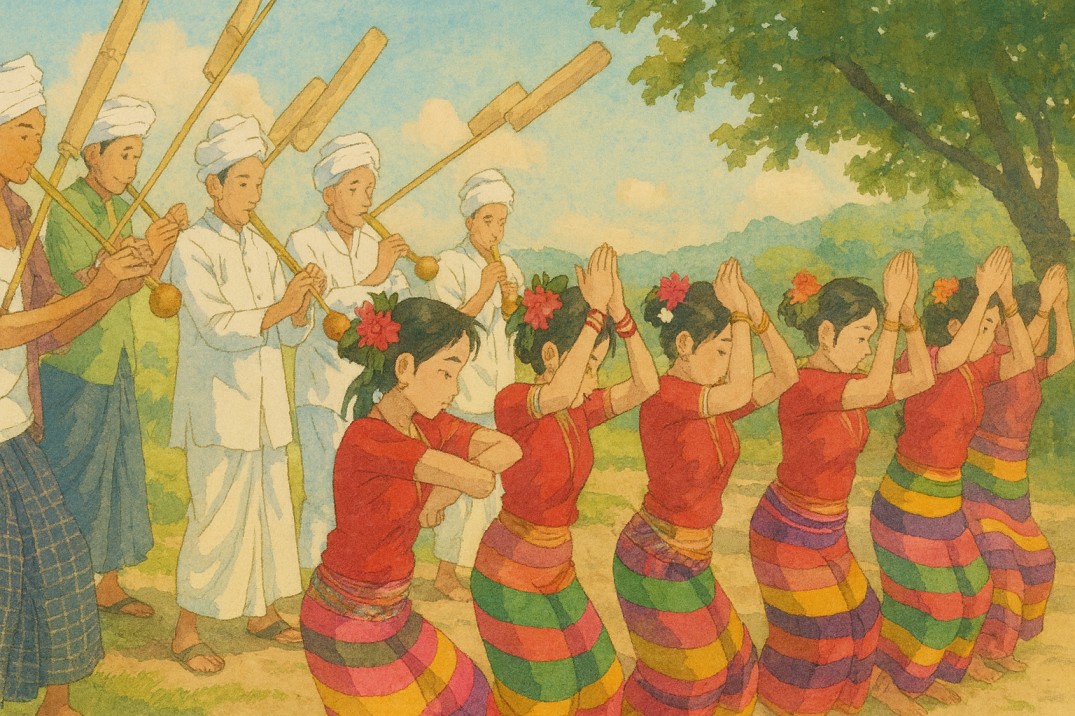
A ritual echoing animistic sacrificial traditions, the cow is placed in a bamboo enclosure (Chhid) in the village center. Women dance around the pen, synchronized with plung (bamboo flute) music played by men, expressing reverence and communal vitality. The movement is grounded, fluid, and solemn, resembling early animistic trance states.
Cha Plau Plai (Rice Drying Dance)
Depicts women drying rice in the autumn sun, recreating the motions of turning over grains with their feet, as done in the field huts. It is a celebration of labor and harvest.
Dengram Tiyap Plai (Banana Leaf Swaying Dance)
Inspired by the sight of women returning from work with wild banana leaves, this dance imitates the rhythmic swaying of the leaves in the breeze, evoking forest serenity and feminine grace.
Rua Taklan Plai (Snake Mating Dance)
A symbolic interpretation of springtime serpent rituals, it captures the mysterious mating dance of forest snakes through body undulation and slow, hypnotic movements.
Wakling Tah’r Plai (Bird Enchantment Dance)
Inspired by the flight and behavior of the Drongo bird (Bhīmraj), this dance embodies familial love and maternal tenderness as observed in avian life.
Mangcha Tachup Plai (Welcome Dance)
Performed at the beginning of large communal events to welcome respected elders and guests, dancers offer a choreographed “namaskar” with hands placed on the chest.
Hiareng Plai (Warrior Dance)
Reminiscent of historical warfare with the Khumi people, this dance is a reenactment of Mro martial valor. Dancers split into two groups, mimicking attack and defense, wielding wooden swords and shields in traditional combat movements.
Makong Plai (Soul Appeasement Dance)
Performed during funerals to protect the deceased’s spirit. Dancers brandish blades to “ward off” evil spirits and circle the body, accompanied by expert flutists and elder singers.
Wa’ Plai (Funeral Rite Dance)
A specialized variation of Makong Plai, often conducted to guide the dead toward peace, accompanied by symbolic acts of farewell and community mourning.
Cham Plai (Jhum Worship Dance)
A harvest ritual to appease spirits residing in sacred forest spots forbidden for cultivation. Animal sacrifices are made, and dancers, clad in ceremonial dress, perform circular movements around the jhum altar to invoke protection and abundance.
The folk songs and dances of the Mro people are not just expressive art forms—they are living traditions that hold centuries of indigenous wisdom, ecological awareness, and cultural resilience. Each performance, whether a melancholic love song or a spirited war dance, is a manifestation of the Mro worldview: one that sees nature, spirits, and humanity in deep and dynamic relationship.
অরণ্যের প্রতিধ্বনি: ম্রো জাতির লোকগান ও নৃত্য
দক্ষিণ-পূর্ব বাংলাদেশের বনাঞ্চলঘেরা পাহাড়ে বসবাসরত আদিবাসী ম্রো জনগোষ্ঠীর লোকগান (মেং) ও নৃত্য (প্লাই) তাদের মহাজাগতিক বিশ্বাস, সামাজিক সংগঠন ও দৈনন্দিন জীবনের সঙ্গে গভীরভাবে জড়িত। এই সংগীত ও নৃত্যচর্চা শুধু নান্দনিক প্রকাশ নয়—এগুলোই তাদের সম্মিলিত স্মৃতি, আধ্যাত্মিক বিশ্বাস, পরিবেশজ্ঞান ও সামষ্টিক মূল্যবোধ প্রজন্ম থেকে প্রজন্মে সঞ্চারিত করার মাধ্যম। এই প্রবন্ধে ম্রোদের সংগীতধারা ও লোকনৃত্যের বিষয়বস্তু, নান্দনিক বৈশিষ্ট্য এবং আচারিক তাৎপর্যের বিশদ বিশ্লেষণ উপস্থাপন করা হয়েছে।
মেং: ম্রোদের লোকগান
ম্রোদের লোকগান গভীর আবেগময় ও কাহিনিমূলক—এগুলো তাদের আনন্দ-বেদনা, ইতিহাসচেতনা ও অন্তর্জগতের প্রতিফলন। দক্ষিণ এশীয় ধ্রুপদী সঙ্গীতের জটিলতা এড়িয়ে, ম্রোদের গান সরল অথচ মর্মস্পর্শী সুরে রচিত; এই সুর প্রকৃতির সঙ্গে একাত্ম হয়ে মিশে যায়—পাখির ডাক, পাতার মর্মর, ঝর্ণার ধ্বনির সঙ্গে। গানগুলো শেখানো হয় না কোনো আনুষ্ঠানিক প্রশিক্ষণের মাধ্যমে; শ্রবণ ও অনুকরণের দ্বারা প্রজন্মান্তরে মৌখিকভাবে সঞ্চারিত হয়।
বেশিরভাগ ম্রো গানই অজ্ঞাত লেখকের। অনেক গান মহাকাব্যিক গঠনযুক্ত, রূপক ও আবেগে সমৃদ্ধ। বিষয়বস্তু হিসেবে পাওয়া যায়—পারিবারিক টানাপোড়েন, প্রেম, বিচ্ছেদ, শিকার ও যুদ্ধের বীরত্ব, এবং বনের রহস্যময় শক্তি। গানগুলোর ধরণ ও পরিবেশ ভেদে প্রকৃতি ও প্রয়োজনে পার্থক্য দেখা যায়।
ম্রো লোকগানের শ্রেণিবিন্যাস
প্লংরাউ মেং (প্রেমের গান)
এই গানগুলো প্রায়শই মহাকাব্যিক ধাঁচে রচিত, যেখানে প্রেম, বিরহ ও মানসিক যন্ত্রণার কাহিনি বলা হয়। এক জনপ্রিয় গানে এক এতিম মেয়ের গল্প বলা হয়েছে—যে সমাজের অবহেলার শিকার, কারণ তার জন্য কেউ কৌলিন্য বা পণপ্রথার আচার সম্পন্ন করার মতো নেই। এসব গান সাধারণত তরুণ-তরুণীদের মিলনোৎসবে (চাম্পুয়া) পরিবেশিত হয়, সঙ্গে বাজে ঐতিহ্যবাহী বাদ্যযন্ত্র রিনাপুং।
তাকলুব মেং (সংলাপধর্মী গান)
বিবাহ বা বলি-আচারসহ আনুষ্ঠানিক উপলক্ষে গাওয়া হয়। এতে প্রশ্নোত্তর বিন্যাসে গীতালাপ চলে। তরুণ-তরুণীরা প্রণয় প্রকাশেও এই গান ব্যবহার করে। দর্শকরা গোল হয়ে বসে সাড়া দেন “এ-হু-হু-উ” ধ্বনি দিয়ে, যা সঙ্গীতের ছন্দকে প্রাণবন্ত করে তোলে। অনেক সময় এই গানরাত্রি ভোর পর্যন্ত স্থায়ী হয় এবং পানীয় ভাগাভাগিও থাকে।
সাংচিয়া মেং (কাহিনিনির্ভর গান)
দীর্ঘ বর্ণনামূলক এই গানগুলোতে বলা হয় পুরাণ, ইতিহাস, ব্যর্থ প্রেম, কিংবা পৃথিবীর উৎপত্তির কাহিনি। উল্লেখযোগ্য কয়েকটি উদাহরণ—
- কেদরেক মাংসা সাংচিয়া মেং (রাজপুত্র মাংসার কাহিনি)
- ইয়াংইয়েন ম্লা নোম মেং (সুন্দরী ইয়াংইয়েন নদীতে ভেসে গেলেন)
- রুইতুম স্লা রোচুত মেং (সুন্দরী রুইতুম সাপের দংশনে নিহত)
প্লাই: ম্রোদের লোকনৃত্য
গানের চেয়েও প্রাচীন ম্রো নৃত্য সমাজজীবনে পবিত্র ও বাস্তব উভয় ভূমিকা পালন করে। বৃষ্টি প্রার্থনা থেকে শুরু করে অশুভ আত্মা তাড়ানো, অতিথি বরণ থেকে যুদ্ধজয় স্মরণ—নৃত্য ম্রো জীবনের প্রায় প্রতিটি স্তরে, ঋতুচক্রে, উৎসবে যুক্ত। এই নৃত্য সম্পূর্ণ সামষ্টিক; কখনও নারী-পুরুষ মিলিতভাবে, কখনও কেবল পুরুষরা দলবদ্ধভাবে পরিবেশন করে। বিনোদনের উদ্দেশ্যে নয়—এগুলো আসলে সামষ্টিক স্মৃতির পুনরাভিনয় ও আত্মিক পুনর্নবীকরণের আচার।
প্রধান নৃত্যরূপসমূহ
- চিয়াসাদ প্লাই — গরু বলিদান আচার
- চাকলু প্লাই — শিকারোৎসব নৃত্য
- হিয়ারেং প্লাই — যুদ্ধ পুনর্অভিনয়
- মাকং প্লাই — পূর্বপুরুষের আত্মা প্রশমনের নৃত্য
- ওয়াংফাউ প্লাই — বৃষ্টি আহ্বান নৃত্য
- ওয়াক প্লাই — অন্ত্যেষ্টিক্রিয়া নৃত্য
- তাংসাক প্লাই — ভূত তাড়ানোর নৃত্য
- চাম প্লাই — জুমফসল উৎসর্গ নৃত্য
বিশেষ আচারিক নৃত্যসমূহ
চিয়াসাদ প্লাই (গরু বলিদান নৃত্য)
প্রাচীন প্রাণবাদী উৎসর্গাচার অনুসারে, গরুকে বাঁশের বেড়ায় (ছিদ) বন্দি করা হয় গ্রামের কেন্দ্রে। নারীরা সেই বেড়ার চারপাশে নৃত্য করেন, পুরুষেরা বাঁশের বাঁশি (প্লুং) বাজান। নৃত্যের ভঙ্গিমা স্থির, তরল ও গম্ভীর—যেন এক আদিম তন্দ্রাচ্ছন্ন ধর্মীয় অবস্থা।
চা প্লাউ প্লাই (ধান শুকানো নৃত্য)
শরৎকালে মাঠে ধান শুকানোর দৃশ্য পুনর্নির্মাণ করে; নারীরা পায়ের ভঙ্গিতে দানাগুলো উল্টে দেওয়ার গতিবিধি অনুকরণ করেন। এটি শ্রম ও ফসলের উৎসবের প্রতীক।
দেংগ্রাম তিয়াপ প্লাই (কলা পাতার দোল নৃত্য)
বনে কাজ শেষে নারীরা কলা পাতা নিয়ে ফেরার দৃশ্য থেকে অনুপ্রাণিত; পাতা দোলার ছন্দে গড়া এই নৃত্য বনজ সৌন্দর্য ও নারীত্বের কোমলতা প্রকাশ করে।
রুয়া তাকলান প্লাই (সাপের প্রজনন নৃত্য)
বসন্তকালের সাপ পূজা থেকে উৎসারিত প্রতীকী নৃত্য; দেহের ঢেউ খেলানো গতি ও ধীর ছন্দ সাপের মিলনের রহস্যময় গতিবিধি ফুটিয়ে তোলে।
ওয়াকলিং তাহ’র প্লাই (পাখির মোহ নৃত্য)
ভীমরাজ পাখির উড়নচাল ও পারিবারিক ভালোবাসা থেকে অনুপ্রাণিত; এটি মাতৃত্ব ও স্নেহের প্রতীক হিসেবে নৃত্যে প্রকাশ পায়।
মাংচা তাছুপ প্লাই (অতিথি বরণ নৃত্য)
বড় সামাজিক অনুষ্ঠানের সূচনায় পরিবেশিত হয়। নৃত্যকারেরা সম্মানসূচক ভঙ্গিতে বুকে হাত রেখে অতিথিদের প্রতি নৃত্যময় “নমস্কার” জানান।
হিয়ারেং প্লাই (যোদ্ধা নৃত্য)
খুমি জনগোষ্ঠীর সঙ্গে ঐতিহাসিক যুদ্ধের স্মৃতি পুনর্গঠন। নৃত্যকারেরা দুই দলে বিভক্ত হয়ে কাঠের তরবারি ও ঢাল হাতে আক্রমণ-প্রতিরোধের ভঙ্গিতে যুদ্ধের দৃশ্য পুনরাভিনয় করেন।
মাকং প্লাই (আত্মা প্রশমন নৃত্য)
অন্ত্যেষ্টিক্রিয়ার সময় মৃত আত্মাকে সুরক্ষা দেওয়ার উদ্দেশ্যে পরিবেশিত হয়। নৃত্যকারেরা ধারালো অস্ত্র হাতে অশুভ আত্মা তাড়ানোর ভঙ্গি করেন এবং মৃতদেহের চারপাশে ঘোরেন; সঙ্গতে থাকে বাঁশিবাদক ও প্রবীণ গায়ক।
ওয়া’ প্লাই (অন্ত্যেষ্টি নৃত্য)
মাকং প্লাই-এরই এক বিশেষ রূপ, যার লক্ষ্য মৃত আত্মাকে শান্তিতে পৌঁছে দেওয়া। এতে বিদায়ের প্রতীকী ভঙ্গি ও শোকের সমবেদনা প্রকাশ পায়।
চাম প্লাই (জুমপূজা নৃত্য)
জুম চাষের দেবতা ও অরণ্যের আত্মাদের উদ্দেশে নিবেদিত। পবিত্র বনাঞ্চলে পশু বলি দেওয়া হয়, আর নৃত্যকারেরা আনুষ্ঠানিক পোশাকে জুমের বেদির চারপাশে গোল ঘূর্ণনে নৃত্য করেন—উর্বরতা ও সুরক্ষার প্রার্থনায়।
ম্রো জনগোষ্ঠীর লোকগান ও নৃত্য কেবল শিল্পরূপ নয়—এগুলো জীবন্ত ঐতিহ্য, যেখানে শতাব্দীর আদিবাসী জ্ঞান, পরিবেশচেতনা ও সাংস্কৃতিক দৃঢ়তা নিহিত। প্রতিটি পরিবেশনা—হোক তা বিষণ্ণ প্রেমগান বা যুদ্ধের উদ্দীপনাময় নৃত্য—প্রকাশ করে এক বিশ্বদৃষ্টি, যেখানে প্রকৃতি, আত্মা ও মানুষ অবিচ্ছেদ্য সম্পর্কের বন্ধনে যুক্ত।
অতএব, ম্রোদের মেং ও প্লাই কেবল অরণ্যের প্রতিধ্বনি নয়—এগুলো তাদের অস্তিত্বের সুর ও নৃত্যময় জীবনদর্শনের চিরন্তন প্রকাশ।