Indigenous Language Notice
This material was documented through engagement with Mro oral and written traditions.
While standardized scripts and knowledgeable language practitioners do exist, producing accurate, verified transcriptions requires trained contributors, time, and fair compensation. At this self-funded stage of the project, it has not been possible to undertake this work responsibly.
Roots and Rights Collective is committed to developing properly resourced, community-led, and consent-based transcription and archiving of indigenous languages in future phases of this initiative.
Mro Folktale — Wild Boar and the Owl
A long time ago, in a dense forest, lived a tiger and a wild boar. Though they lived close, they had never met. The tiger made its den up on the tree branches, while the wild boar built its home at the foot of the tree, nestled in the roots.
One night, a fierce storm swept through the forest. The wind howled and shook the trees. The tiger’s treetop den was torn apart and shattered. Thrown down by the storm, the tiger landed near the base of the tree, dazed and scared. With no place to hide from the storm, it wandered frantically until it spotted a cozy shelter beneath the tree—a well-built burrow.
Desperate, the tiger knocked and called out, “Hello, is anyone inside? Please open the door. I’m in danger!”
From inside, the wild boar replied, “Who are you?”
“I’m the tiger,” came the answer.
Frightened, the boar said, “No, no! I can’t let you in. You’ll eat me!”
The tiger protested, “Of course not! Would anyone eat their host in a time of need? I’m only looking for shelter from the storm.”
Moved by the tiger’s words, the boar opened the door. That night, they both lay down to rest, but the boar couldn’t sleep. The tiger’s presence and heavy snoring kept it awake with worry.
At dawn, the tiger stretched and said, “Brother Boar, may I say something—if you don’t mind?”
“Go ahead,” the boar replied cautiously.
The tiger spoke, “Last night, I had a dream. In the dream, I killed and ate you. So, I’ve decided I should do it for real today.”
Startled, the boar exclaimed, “That’s absurd! Dreams are just dreams. You can’t act on them!”
The tiger insisted, “Dreams do come true. If you don’t believe me, let’s go ask the royal judge.”
Left with no choice, the boar agreed, but requested seven days to bid farewell to friends and family. The tiger agreed. While the boar went to say goodbye, the cunning tiger visited the judge and made a secret deal: if the judge ruled in the tiger’s favor, they would share the boar’s meat.
Tempted by the offer, the judge agreed.
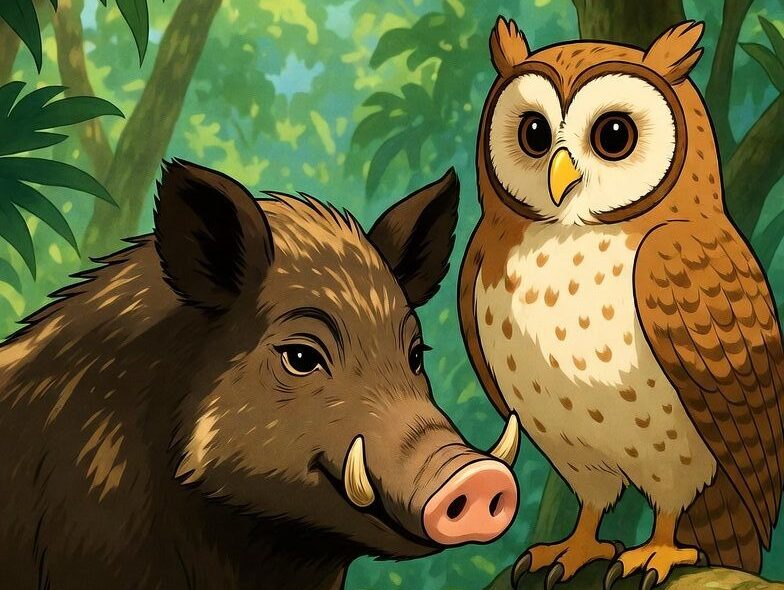
Days passed. The trial day approached. The boar, weakened by worry and fasting, wandered the forest in despair. Just two days remained. Then, by chance, he met an owl.
Seeing his worn face, the owl asked, “Brother Boar, what troubles you so deeply?”
The boar wiped his tears and explained everything—from the storm to the dream, to the tiger’s demand.
The owl listened quietly, then said, “Don’t worry, I’m with you. Go home. Eat well, rest well. I promise, I’ll stand by your side and get you out of this mess.”
Though thankful, the boar wondered how such a small creature could help. Still, he placed his faith in the owl.
On the day of the trial, the boar arrived with the owl. Everyone else was already present. The judge scolded, “Why are you late?”
The boar replied humbly, “The road was rough, sir. Please forgive us.”
As the trial began, the owl yawned and said, “Your Honor, I couldn’t sleep last night—my child was ill. May I nap a little? Just wake me when it’s time to hear the verdict.”
Amused, the judge allowed it. The owl lay down on a mat beside the judge and pretended to sleep.
As the trial proceeded, the crowd supported the tiger. “If he dreamt of eating the boar, he must do it,” they said. They mocked the boar, “Where’s your lawyer now? That sleepy owl? What can he possibly do?”
The boar sat in silence, heart heavy, ashamed and disappointed in the owl.
Finally, the verdict was announced: the tiger would be allowed to kill the boar.
Then they woke the owl.
Stretching and yawning, the owl addressed the court: “Your Honor, forgive my boldness. But I just had the most delightful dream! I dreamt that I married your youngest daughter! What joy! My wedding and the boar’s death on the same day—what luck!”
The judge’s face turned red with fury. “What nonsense is this? You, a lowly owl, dream of marrying my daughter? How dare you speak such trash in my court!”
The owl smiled and replied, “Ah, but honorable judge, a dream must come true, isn’t that what you said? If the tiger can kill the boar because of his dream, then I too should marry your daughter!”
The court fell silent.
No one could argue against the owl’s logic. Realizing his mistake, the judge withdrew the verdict and bowed in apology to the owl.
The trial was dismissed. The boar was spared.
The owl had not been sleeping. He had only pretended to, waiting for the right moment to strike with wisdom.
Defeated and hungry, the tiger slunk away. The boar thanked the owl with deep gratitude, and both returned home safely.
Among the Mro people, there’s an old saying:
“Where there’s a wild boar, there’s always an owl nearby.”
ম্রো রূপকথা — শূকর আর পেঁচার গল্প
অনেক অনেক দিন আগের কথা। পাহাড়ঘেরা ঘন বনে থাকতো এক বাঘ আর এক বন্য শূকর। তারা একে অপরের কথা জানতো ঠিকই, কিন্তু কখনও দেখা হতো না। বাঘ বাসা বাঁধতো উঁচু গাছের ডালে, আর শূকর থাকতো মাটির কাছে, গাছের গোড়ায় ছোট্ট গর্তের মতো বাসায়।
একদিন হঠাৎ পাহাড়ে এক প্রবল ঝড় এলো। বাঘের ডালে বাঁধা বাসা ঝড়ে ছিঁড়ে গিয়ে গুঁড়িয়ে পড়লো। বাঘ নিচে পড়ে গিয়ে আহত হলো। চারপাশে কিচ্ছু বোঝার উপায় নেই—অন্ধকার, ঝড়ের শব্দ, আর ঠান্ডা বৃষ্টি। সে তখন দিশেহারা হয়ে বনভূমির মাঝে ছুটে বেড়াতে লাগলো আশ্রয়ের খোঁজে।
তখন সে হঠাৎ দেখতে পেল গাছের নিচে এক ছোট্ট সুন্দর কুঁড়েঘর। ভিজে শরীর, কাঁপতে থাকা গা—বাঘ ছুটে গেলো সেই ঘরের দরজায়।
দরজায় কড়া নেড়ে ডেকে উঠলো,
— “ভাই রে, ঘরে কেউ আছেন? আমি বিপদে পড়েছি। একটু আশ্রয় দিন।”
ভিতর থেকে শূকর কাঁপা গলায় জবাব দিলো,
— “তুমি কে ভাই?”
— “আমি বাঘ,” বললো বাঘ।
শূকর অবাক হয়ে বললো,
— “না না, আমি দরজা খুলতে পারবো না। তুমি নিশ্চয়ই আমাকে খেতে এসেছো।”
— “আহা না ভাই! আমি এমন কেউ না। বিপদের দিনে কেউ কি আশ্রয়দাতাকে খায়? আমি শুধু একটু গা সুকোতে চাই।”
শূকরের মন গললো। দরজা খুলে দিলো সে।
বনের গভীর এক ঘরে দুই প্রাণী একসাথে রাত কাটালো। কিন্তু শূকর ঠিকমতো ঘুমোতে পারলো না—বাঘের গর্জন আর নাক ডাকার আওয়াজে তার বুকটা দুলে উঠছিলো।
পরদিন সকালে ঘুম ভাঙতেই বাঘ বললো,
— “ভাই শূকর, একটা কথা বলবো, কিছু মনে করো না।”
— “বলো ভাই, শুনছি।”
— “রাতে স্বপ্নে দেখেছি, আমি তোমাকে খেয়ে ফেলেছি। তাই ভাবছি, আজ বাস্তবেও সেটাই করি।”
শূকর স্তব্ধ হয়ে গেলো।
— “স্বপ্ন? ভাই, স্বপ্ন কি কখনো বাস্তব হয়?”
— “স্বপ্ন যদি সত্য না হতো, তাহলে দেবতা আমাদের স্বপ্ন দেখাতেন কেন? বিশ্বাস না হলে চলো, বিচারকের কাছে যাই।”
শূকর ভয় পেলেও বললো,
— “চলবো। তবে আগে আমাকে সাতদিন সময় দাও, বন্ধুদের ও আত্মীয়দের দেখা করে আসি।”
বাঘ রাজি হলো। কিন্তু ভিতরে ভিতরে সে ছলনা আঁটলো। সে গিয়ে বিচারকের সাথে চুক্তি করলো—শূকরকে হত্যা করলে, তার মাংস ভাগ করে খাওয়া হবে। বিচারকও লোভে পড়ে রাজি হয়ে গেলেন।
এইদিকে শূকর কেবলই চিন্তায় পড়ে গেলো। চার-পাঁচ দিন কেবল ঘুরে বেড়ালো, কিছু খায় না, চোখে ঘুম নেই। তার শরীর শুকিয়ে কাঠ হয়ে গেলো।
ছয়দিনের দিনে, সে বনের গভীরে হাঁটতে হাঁটতে এক বুড়ো পেঁচার সঙ্গে দেখা পেলো।
পেঁচা জিজ্ঞেস করলো,
— “ভাই শূকর, তোমার মুখে এত দুঃখের ছায়া কেন?”
শূকর সবকিছু খুলে বললো পেঁচাকে।
পেঁচা হেসে বললো,
— “আহা ভাই! এটা কোনো বিপদ? তুমি নিশ্চিন্তে ঘুমাও, পেটভরে খাও, আমি আছি। আমি তোমাকে বাঁচাবো, কথা দিলাম।”
শূকর ভেবেছিল, পেঁচা তো ছোট্ট প্রাণী, সে কি পারবে কিছু করতে? তবুও সে আশা নিয়ে তার সঙ্গে রওনা হলো।
বিচারের দিন এসে গেলো। শূকর ও পেঁচা কিছুটা দেরিতে পৌঁছালো। বিচারক রেগে গর্জে উঠলেন,
— “তোরা এত দেরি করলি কেন?”
শূকর কাঁপা গলায় বললো,
— “দয়া করবেন, পথে পাহাড়ি গিরিপথ ছিলো, তাই দেরি হলো।”
বিচার শুরু হলো। বাঘ গর্জে বললো,
— “আমি স্বপ্নে দেখেছি, আমি শূকরকে খেয়েছি। তাই বাস্তবে সেটাই করা উচিত।”
সবাই মাথা নাড়লো। কেউ শূকরের পক্ষে কথা বললো না। সবাই ব্যঙ্গ করে বললো,
— “শূকর ভাই, তোমার উকিল পেঁচা তো ঘুমাচ্ছে! সে কীই বা বলবে?”
আসলে, পেঁচা ঘুমে ছিলো না—চিন্তা করছিলো।
যখন বিচারক ঘোষণা দিলেন,
— “আজই শূকরকে হত্যা করা হবে,” তখন পেঁচা চোখ মেলে উঠলো।
সে হাই তুলে বললো,
— “মহাশয়, একটা সুস্বপ্ন দেখলাম—আপনার ছোট মেয়ের সাথে আমার বিয়ে হয়েছে। কী সৌভাগ্য আমার! আজ শূকরকে হত্যা, আর আমার বিয়ে—একসাথে দুটো উৎসব!”
বিচারক রেগে উঠলেন,
— “তুমি পাগল নাকি? একটা পেঁচা হয়ে আমার মেয়েকে বিয়ে করবে?”
পেঁচা মাথা নেড়ে বললো,
— “স্বপ্ন তো সত্য হয়—এ কথা আপনি নিজেই স্বীকার করেছেন। তাই স্বপ্নে যদি আমি আপনার জামাই হই, তবে বাস্তবেও তাই হওয়া উচিত। যদি তাই না হয়, তাহলে বাঘের স্বপ্নও তো মিথ্যা!”
সারা সভা স্তব্ধ হয়ে গেলো।
বিচারক নিজের ভুল বুঝলেন। মাথা নিচু করে পেঁচার কাছে ক্ষমা চাইলেন। শূকরকে মুক্তি দিলেন। সভা ভেঙে গেলো। বাঘ গর্জন করতে করতে ক্ষুধার জ্বালায় ফিরে গেলো বনে।
শূকর চোখ ভেজা ধন্যবাদ নিয়ে পেঁচার দিকে তাকালো। তারা দুজনেই ফিরে গেলো নিজ নিজ পথে—একজন আত্মবিশ্বাস নিয়ে, আরেকজন বন্ধুত্বের ঋণে।
আজও ম্রোদের মুখে মুখে শোনা যায় এক প্রবাদ—
“যেখানে শূকর থাকে, সেখানেই থাকে পেঁচা; আর বুদ্ধির সাথে থাকে বাঁচার পথ।“