မာရ်မာဝတ္ထုပုံပြင် — နှံဆူသျှေငှက်နဲ့မာနကြီးသောဆင်
Translated by U Wainnita
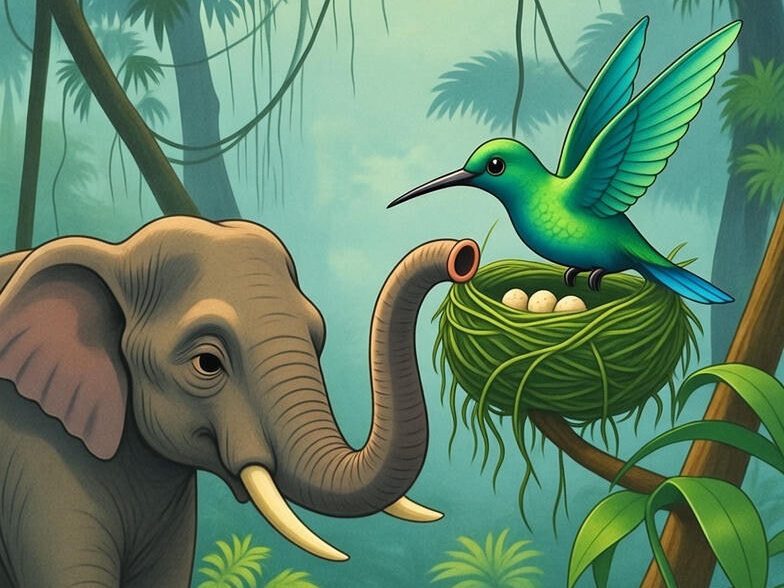
တောင်များဝန်းရံထားသော တောအုပ်ထူထပ်သောနေရာတွင် နှံဆူသျှေငှက်သည် သစ်ပင်ငယ်တစ်ပင်တွင် အတင်းအိမ်လုပ်ခဲ့သည်။ သူမသည် ဥများဥခဲ့ပြီး ကောင်းကင်တွင် သီချင်းဆိုကာ လေထဲတွင် တောင်ပံများကို ဝှေ့ယမ်းကာ သူမ၏ကလေးများ မွေးဖွားလာရန် စောင့်ဆိုင်းခဲ့သည်။
အဲဒီတောထဲမှာ ဆင်ကြီးတစ်ကောင်ရှိတယ်။ သူကြောက်တဲ့ သတ္တဝါတစ်ကောင်မှ မရှိဘူး။ သူ့ကိုယ်သူ တောမှာဘုရင်လို့ သတ်မှတ်နေတယ်။ နေ့တိုင်း အစားအစာစားပြီး ပြန်လာတဲ့လမ်းမှာ သစ်ပင်ငယ်တစ်ပင်မှာ နှံဆူသျှေအတင်းတစ်အိမ်ရှိတယ်။ သူ့ခန္ဓာကိုယ်ရဲ့ သက်ရောက်မှုက သစ်ပင်ကို လှုပ်ခါစေပြီး နှံဆူသျှေရဲ့ အတင်းလည်း တုန်ခါစေတယ်။
တစ်နေ့မှာ နှံဆူသျှေက “ဆင်ဘုရင်၊ ဒီသစ်ပင်ထဲမှာ ဥတွေရှိတယ်။ သစ်ပင်ကို ဘေးဖယ်ပေးရင် ကျေးဇူးတင်ပါတယ်” လို့ တောင်းဆိုခဲ့တယ်။
ဆင်က ပြုံးပြီး ပြောလိုက်တယ်။
“မင်း! ဒီလောက်သေးငယ်တဲ့ငှက်လေးလား။ ငါ့ကိုလမ်းပြပေးလား။ ဒီတောအုပ်က ငါ့အပိုင်ပဲ – ငါကိုယ်တိုင်လမ်းကို ဆုံးဖြတ်တယ်။”
နှံဆူသျှေ ဘာမှထပ်မပြောတော့ဘူး။
ရက်အနည်းငယ်ကြာတော့ ဥတွေပေါက်လာပြီး ငှက်ကလေးတွေ မွေးဖွားလာတယ်။
ညနေခင်းအလင်းရောင် မှိန်ဖျော့လာတယ်။ အဝေးက ဆင်ရဲ့ လေးလံတဲ့ခြေသံကို ကြားတော့ နှံဆူသျှေက ထပ်ပြောလိုက်တယ်။
“ဆင်ဘုရင်! ဒီနေ့ ငါ့ရဲ့ ကလေးတွေ မွေးပြီ။ ဒီနေ့ တခြားလမ်းကို သွားပါ။”
ဆင်က ဟိန်းဟောက်လိုက်ပြီး “မင်းက အမိန့်တွေ ထပ်ပေးနေတာလား။ မင်း ငါ့ကို ဘုရင်ဖြစ်ရတာ ဘာကိုဆိုလိုလဲဆိုတာ သင်ပေးရလိမ့်မယ်!” လို့ ပြောလိုက်တယ်။
ဆင်က ရှေ့ကို ထွက်လာတယ်။ သစ်ပင်က တုန်သွားတယ်။ အတင်းက လဲကျသွားတယ်။ ငှက်ကလေးတွေ လဲကျသွားတယ်။ နှံဆူသျှေက ပြေးပြီး သူတို့ကို ကာကွယ်ဖို့ အတောင်တွေ ဖြန့်ထားပေမယ့် ဘာမှ မတတ်နိုင်ဘူး။ ငှက်ကလေးတွေ သေသွားတယ်။
နှံဆူသျှေက နာကျင်စွာနဲ့ ဒေါသတကြီး ငိုကြွေးတယ်။ သူမက ဆင်ကို ကျိန်ဆဲတယ်။
ဆင်ရဲ့ဒေါသဟာ အထွတ်အထိပ်ကို ရောက်သွားတယ်။ သူက သစ်ပင်ကို မြေပြင်ပေါ် ကြေမွသွားစေပြီး နှံဆူသျှေရဲ့ မျှော်လင့်ချက်တွေအားလုံးကို အဆုံးသတ်စေခဲ့တယ်။
ပြီးတော့ နှံဆူသျှေက “အာဏာရှင်ကို တရားမျှတမှုဆီ ခေါ်ဆောင်သွားရမယ်” လို့ တွေးလိုက်တယ်။
သူ ထွက်ပြေးသွားပြီး သူ့သူငယ်ချင်းတွေဖြစ်တဲ့ ကျီးကန်း၊ ဇီးရက်၊ ဖားနဲ့ ပုရွက်ဆိတ်တွေကို တွေ့လိုက်တယ်။
နှံဆူသျှေက “သူငယ်ချင်းတို့၊ ရက်စက်ကြမ်းကြုတ်တဲ့ ဆင်တစ်ကောင်က ငါ့ရဲ့ကလေးတွေကို သတ်ပစ်လိုက်ပြီ။ ငါ လက်စားချေချင်တယ်။ ငါ မင်းတို့ရဲ့ အကူအညီ လိုအပ်တယ်” လို့ ပြောလိုက်တယ်။
ပုရွက်ဆိတ်ကပြောတယ် “မတရားမှုကို မကန့်ကွက်တာ မှားတယ်။ ဘာလုပ်ရမလဲဆိုတာ ပြောပြပါ” လို့ ပြောတယ်။
ကျီးကန်း၊ ဖား၊ ဇီးရက်—သူတို့အားလုံး သဘောတူကြတယ်။
နောက်တစ်နေ့ မွန်းလွဲပိုင်းမှာ ကျီးကန်းဟာ ဆင်ရဲ့မျက်လုံးဆီကို သွားပြီး အင်းဆက်စားချင်ယောင်ဆောင်ကာ မျက်လုံးတစ်ဖက်ကို တစ်ချက်ကိုက်ပြီး ဆွဲထုတ်လိုက်တယ်။
ဆင်က အော်ဟစ်ပြီး ထွက်ပြေးသွားတယ်။
နောက်တစ်နေ့မှာ ဇီးရက် ထွက်သွားခဲ့တယ်။ အကူအညီမဲ့နေတဲ့ ဆင်က ရွှံ့ထဲမှာ ထိုင်ငိုနေတယ်။ ဇီးရက်ကလည်း စကားပြောချင်ယောင်ဆောင်ပြီး ခေါင်းပေါ်တက်ပြီး တခြားမျက်လုံးတစ်ဖက်ကိုလည်း ဖျက်ဆီးလိုက်တယ်။
ဆင်က မျက်စိလုံးဝကန်းသွားပြီ။ ရေရှာဖို့ ပြေးလာခဲ့တယ်။
နှံဆူသျှေက “အခု ပုရွက်ဆိတ်လားလိမ့်မယ်။ ဆင်ရဲ့နှာမောင်းကို ကိုက်ပါ” ဟုလို့ ပြောပါတယ်။
ပုရွက်ဆိတ်က သွားပြီး အဆိပ်ကို ဖြန့်လိုက်တယ်။ ဆင်ရဲ့နာကျင်မှုက ပိုပိုဆိုးလာတယ်။
ပြီးတော့ ဖားက တောင်အလယ်ကို သွားပြီး အော်တယ်။
ဆင်က “အဲဒီမှာ ရေရှိမယ်ထင်တယ်” လို့ တွေးလိုက်တယ်။ သူက ဖားကို လှမ်းအော်တယ်။
ဖားက သူ့ကို တောင်ထိပ်ကို ခေါ်သွားတယ်။ ပြီးတော့ အောက်ကနေ အော်တယ်။
ဆင်က အော်သံလို့ ထင်ပြီး ရှေ့ကို တိုးကပ်ပြီး တောင်ကြားထဲကို ပြုတ်ကျသွားတယ်။
သူ့ခန္ဓာကိုယ် ကွဲကြေသွားတယ်။ သူ သက်ပြင်းချပြီး “ငါ ဘယ်သူ့ကိုမှ မထိခိုက်ခဲ့ဘူး။ ဘယ်သူက ငါ့ကို ဒီလိုလုပ်တာလဲ” လို့ ပြောလိုက်တယ်။
အပေါ်မှာ ရပ်နေတဲ့ နှံဆူသျှေက “ငါ – မင်းမုန်းတီးတဲ့သူ။ မင်း ငါ့ကလေးတွေကို သတ်ခဲ့တာ။ ဒီနေ့က တရားစီရင်ရာနေ့ပဲ” လို့ ပြောလိုက်တယ်။
ဆင်က “ငါ့ကို ခွင့်လွှတ်ပါ နှံဆူသျှေ။ အရင်က ငါ ခွန်အားနဲ့ အရာအားလုံးကို လုပ်နိုင်တယ်လို့ ထင်ခဲ့တာ။ အခုတော့ မာနဆိုတာ အဆုံးမရှိဘူးဆိုတာ ငါ နားလည်ပြီ” လို့ ပြောလိုက်တယ်။ ဒီလိုပြောပြီး ဆင်ရဲ့ခန္ဓာကိုယ် တိတ်ဆိတ်သွားတယ်။
နှံဆူသျှေဟာ သူ့သူငယ်ချင်းတွေနဲ့အတူ တရားမျှတမှုဇာတ်လမ်းကို သီချင်းနဲ့ တောအုပ်တစ်ခုလုံးမှာ ဖြန့်ဝေခဲ့တယ်။
Marma Folktale — The Tiny Bird and the Proud Elephant
In a quiet forest nestled among the hills, a tiny bird built her nest on the branch of a slender tree. She laid her eggs with hope, singing to the winds and waiting for her little ones to hatch.
In that same forest lived a mighty elephant. With no predator to fear, he roamed where he pleased and called himself the king of the forest. Each day, on his way back from foraging, the elephant brushed past the tiny tree. The ground would shake, and the fragile nest would tremble.
One morning, the bird called out humbly,
“O Elephant King, this little tree cradles my eggs. Please walk a little away so my nest stays safe.”
The elephant trumpeted with laughter.
“You? A tiny bird? Daring to ask the forest king to change his path? This forest is mine—I go where I wish.”
The bird stayed silent. Soon, her chicks were born, soft and featherless. One evening, as the forest turned gold, she saw the elephant approaching. She cried again, “Kind king, my children are newborn. Please take another path today.”
But the elephant bellowed, “No bird commands the king!”
With heavy steps, he passed by as before. The tree shook violently. The nest tipped. The chicks tumbled to the ground.
The mother bird flew down in horror. She wailed, she wept, she cursed the elephant. Enraged by her voice, the elephant turned back, crushed the tree under his feet, and trampled the helpless chicks.
Grief burned into rage. The bird knew: even the smallest being must rise against cruelty. She flew across the forest, calling upon her friends—the crow, the myna, the frog, and the fire-ant.
Together they formed a pact.
The next evening, while the elephant rested after a long day, the crow flew down and pretended to peck at insects near the elephant’s face. In one swift strike, he gouged out an eye. The elephant screamed in pain and fled.
The following day, the myna took her turn. As the blind elephant lay moaning near a muddy hollow, the myna pretended to offer comfort. In a flash, she struck his remaining eye. Now the forest king was truly blind.
Panic-stricken and thirsty, the elephant stumbled through the forest. The fire-ant crept up and bit his trunk with venomous rage. The pain grew unbearable. The elephant begged the forest for water.
Hearing this, the frog let out a deep croak from atop a rocky hill. The elephant, desperate, followed the sound, believing a spring lay ahead. The frog moved slowly higher, calling again and again, luring the elephant to the peak of a steep cliff.
At last, the elephant reached the edge. One final croak echoed from below. Without seeing, without thinking, the elephant stepped forward—and fell.
The mighty body crashed down the rocks. Bones shattered, breath fled. Lying broken, the elephant whispered, “Who has done this to me? I ruled this forest. I harmed no one.”
From above, the tiny bird looked down.
“You harmed my children. You crushed their lives beneath your pride. I am the one you called small. I am the one you ignored.”
The elephant said no more. His strength was gone. His power meant nothing. The forest grew quiet once again.
And the little bird? She flew home with her friends, singing a song of justice carried on the wind.
মারমা রূপকথা — টুনটুনি ও অহঙ্কারী হাতি
পাহাড় ঘেরা এক ঘন বনে, এক টুনটুনি ছোট্ট একটি গাছে বাসা বেঁধেছিল। ডিম পেড়েছিল সে—আকাশে গান গেয়ে, হাওয়ায় আশার দোলা দিয়ে অপেক্ষা করছিল বাচ্চাদের জন্মের।
সেই বনে বাস করত এক বিশাল হাতি। তার সামনে ভয় পায় এমন কোনো জন্তু ছিল না। সে নিজেকে মনে করত বনের রাজা। প্রতিদিন খাবার খেয়ে ফেরার পথে সে যে পথে চলত, সেখানেই ছিল টুনটুনির গাছ। তার দেহের ধাক্কায় গাছটা দুলে উঠত, আর টুনটুনির বাসা কেঁপে উঠত।
একদিন টুনটুনি অনুরোধ করল,
“হাতিরাজ, এই গাছে আমার ডিম আছে। গাছটা একটু পাশ কাটিয়ে গেলে আমি কৃতজ্ঞ থাকব।”
হাতি হেসে বলল,
“তুই! এমন এক পুঁচকে পাখি? আমায় পথ দেখাস? এই বন আমার—আমার চলার পথও আমি নিজেই ঠিক করি।”
টুনটুনি আর কিছু বলল না।
কয়েকদিন পর, ডিম ফুটে বাচ্চারা জন্ম নিল।
সন্ধ্যার আলো ঝিমিয়ে আসছিল। দূরে হাতির ভারি পায়ের শব্দ শুনে টুনটুনি ফের বলল,
“হাতিরাজ! আজ আমার ছানারা জন্মেছে। দয়া করে আজ অন্য পথে যান।”
হাতি গর্জে উঠল,
“তুই আবার আদেশ দিস? তোকে এখনই শেখাতে হবে রাজার সম্মান কাকে বলে!”
হাতি এগিয়ে এল। গাছ কাঁপল। বাসা উল্টে পড়ল। ছানারা নিচে পড়ে গেল। টুনটুনি ছুটে এল, ডানা মেলে রক্ষা করতে চাইল—কিন্তু কিছুই করতে পারল না। বাচ্চারা মারা গেল।
ব্যথা আর ক্ষোভে টুনটুনি কেঁদে উঠল। হাতিকে অভিশাপ দিল।
হাতির রাগ চরমে উঠল। সে গাছটা মাটিতে মচকে দিল, শেষ করে দিল টুনটুনির সব আশা।
টুনটুনি তখন ভাবল, “অত্যাচারীর বিচার করতেই হবে।”
সে উড়ে উড়ে বন্ধু খুঁজে আনল—কাক, শালিক, ব্যাঙ আর পিঁপড়ে।
টুনটুনি বলল, “বন্ধুরা, আমার ছানাদের মেরে ফেলেছে এক নির্মম হাতি। আমি প্রতিশোধ চাই। তোমাদের সহায়তা দরকার।”
পিঁপড়ে বলল, “অন্যায়ের প্রতিবাদ না করাও অন্যায়। বলো কী করতে হবে।”
শালিক, ব্যাঙ, কাক—সবাই রাজি হল।
পরদিন বিকেলে কাক হাতির চোখের কাছে গিয়ে পোকা খাওয়ার ভান করে এক ঠোকরে একটি চোখ উপড়ে ফেলল।
হাতি চিৎকার করে ছুটতে লাগল।
পরদিন শালিক গেল। অসহায় হাতি তখন কাদায় বসে কান্না করছিল। শালিক কথা বলার ছলে তার মাথায় উঠে দ্বিতীয় চোখটিও নষ্ট করল।
হাতি তখন সম্পূর্ণ অন্ধ। পানির জন্য ছটফট করতে লাগল।
টুনটুনি বলল, “এবার পিঁপড়ে যাবে। হাতির শুঁড়ে কামড় দিবে।”
পিঁপড়ে গিয়ে বিষ ছড়িয়ে দিল। হাতির যন্ত্রণা আরও বাড়ল।
তখন ব্যাঙ পাহাড়ের মাঝখানে গিয়ে ডাক দিতে লাগল।
হাতি ভাবল, “ওখানেই বুঝি পানি।” সে হাঁটতে লাগল ব্যাঙের ডাকে ডাকে।
ব্যাঙ তাকে পাহাড়ের চূড়ায় নিয়ে গেল। তারপর নীচ থেকে ডাক দিল।
হাতি ডাকে ভেবে পা বাড়াল—আর পড়ে গেল পাহাড়ের খাদে।
তার দেহ ছিন্নভিন্ন হয়ে গেল। শ্বাস ফেলে সে বলল,
“আমি তো কারো ক্ষতি করিনি। কে আমার এই সর্বনাশ করল?”
উপরে দাঁড়িয়ে টুনটুনি বলল,
“আমি—যাকে তুই তুচ্ছ বলেছিলি। আমার ছানাদের তুই মেরেছিলি। আজ বিচার হয়েছে।”
হাতি বলল,
“ক্ষমা করো, টুনটুনি। আমি ভাবতাম, শক্তি থাকলেই সব করা যায়। এখন বুঝছি, অহংকারের শেষ আছে।” এই বলে হাতির দেহ নিস্তব্ধ হয়ে গেল।
টুনটুনি তার বন্ধুদের নিয়ে গানে গানে বন জুড়ে ন্যায়ের গল্প ছড়িয়ে দিল।