Indigenous Language Notice
This material was documented through engagement with Mro oral and written traditions.
While standardized scripts and knowledgeable language practitioners do exist, producing accurate, verified transcriptions requires trained contributors, time, and fair compensation. At this self-funded stage of the project, it has not been possible to undertake this work responsibly.
Roots and Rights Collective is committed to developing properly resourced, community-led, and consent-based transcription and archiving of indigenous languages in future phases of this initiative.
A Living Tapestry : Festivals and Rituals of the Mro
Festivals are the living spirit of a people—manifestations of their cultural vitality, spiritual consciousness, and social cohesion. In agrarian societies like that of the Mro community in the Chittagong Hill Tracts of Bangladesh, festivals and rituals are deeply entwined with seasonal cycles, agricultural practices, and cosmological beliefs. From religious observances to community-wide celebrations, the Mro people’s ceremonial life reflects a harmonious blend of devotion, tradition, ecological awareness, and communal joy.
This article provides an in-depth exploration of Mro religious festivals—primarily associated with the indigenous Krama faith and Christianity—as well as seasonal and agrarian rituals such as the Wari Nat (Jhum worship), Chamungpok Poi (Harvest Festival), and Khang (Purification Ritual). These practices are not merely cultural remnants but serve as vibrant expressions of indigenous worldview, environmental ethics, and collective identity.
Krama Religious Festivals
The Krama faith, an indigenous religious system among the Mro, observes four major annual festivals and one religious convention, each lasting three days. These are deeply spiritual events that involve the entire community in collective prayer, purification, and ethical renewal.
Ningsar Kyori Poi (New Year Festival)
Held in April, coinciding with the Bengali month of Boishakh, this is the Krama New Year celebration. Youth gather early to collect dew-kissed flowers and offer them at the prayer house before sunrise. The festival marks a symbolic farewell to the old year and welcomes the new with hope and devotion. Key religious figures—such as the Rip-Up (moral guide), Tra-Up (judge), and Chakhang-Up (healer)—enter ritual seclusion during the festival, receiving food and water from villagers.
Ta’ Thwak Poi (Forest Retreat Observance)
This solemn festival commemorates the forest retreat of Krama founder Menle, who entered ascetic life in 1986. Worshippers pray three times daily for his spiritual fulfillment, adorn his portrait with garlands, and listen to religious readings throughout the day.
Ningma Naikhang Poi (Post-Harvest Rest Festival)
Observed between October and November after the harvest, this festival offers thanks for the yield and dedicates the first portion of the produce to divine forces. It is a time for spiritual rest, gratitude, and renewed prayer for agricultural blessings.
Ning Ak Poi (Year-End Festival)
Celebrated in March, this ritual coincides with the end of the Burmese calendar. Community members gather to pray for a release from past sorrows and to embrace the upcoming year with spiritual readiness.
Annual Krama Convention
Held each December in the birthplace of Menle (Kramadi village), this three-day gathering draws Krama adherents from various regions. The event features sermons, discussions on education, committee meetings, and lively cultural programs and fairs each evening.
Christian Religious Festivals
Mro communities who follow Christianity celebrate global Christian festivals with equal devotion and local adaptation.
Christmas (Borodin)
Observed on December 25, Christmas is a day of collective prayer, hymns, and readings from the Bible. It is celebrated with deep reverence, reaffirming faith in the birth of Jesus Christ and fostering community spirit.
Easter (Star Sunday)
Though less detailed in local records, Easter is recognized as a central religious event among Christian Mro families, commemorating the resurrection of Christ and symbolizing hope and renewal.
Seasonal and Agrarian Rituals
Wari Nat (Jhum Worship)
This unique ritual is performed to appease the malevolent spirits believed to inhabit the shifting cultivation fields (jhum). If illness strikes during the harvest, it is attributed to these spirits’ anger due to intrusion into their domain. These spirits are described in vivid mythical forms—blind, limbless, or with multiple heads or tails.
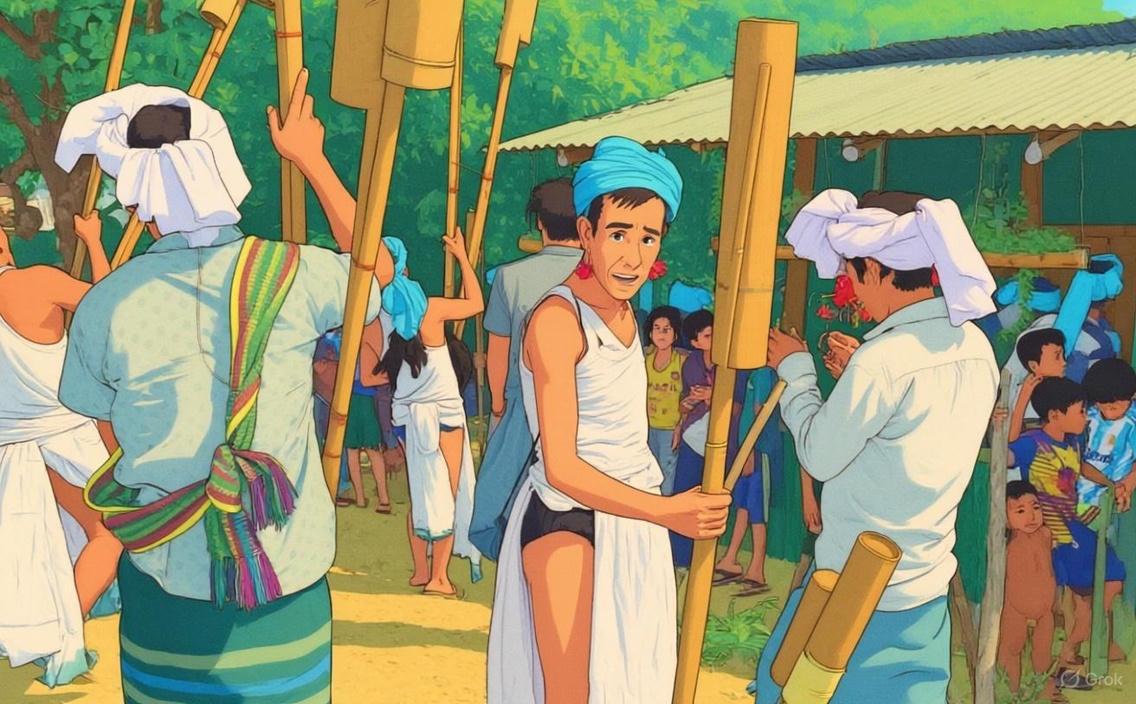
The ritual involves a collective feast offered in the jhum fields. Preparations begin a day early, with each household sending a representative and bringing specific offerings such as dried shark fish, river snails, and freshwater prawns. Complex bamboo altars are erected, both on the ground and on raised platforms, decorated with items like ginger leaves, marigold flowers, earthen elements, and symbolic crops. A shaman (Wama) leads the ritual with chants inviting spirits to accept the offerings and cease their wrath.
Chamungpok Poi (Harvest Festival / Nabanna)
Held before any crops are consumed, this major festival honors the Nabanna Devi (Harvest Goddess) and Thurai (Supreme Creator). The Mro grow over 30 varieties of crops in their jhum fields, and none can be harvested or eaten until the first offerings are made. Breaking this rule is believed to lead to crop spoilage or afflictions such as blindness or deformity. The ritual reinforces ecological respect, spiritual discipline, and the sanctity of nature’s bounty.
Khang (Purification and Silence Ritual)
Khang, meaning purity, is a communal observance aimed at spiritual cleansing. It is held twice a year—once before jhum planting (Batthak Khang) and once before the dry season. For three days, the village is completely sealed off. No one may enter or leave, and if anyone is outside, they must remain away until the ritual concludes. Organized by the village Karbari (chief), the ritual involves collective decisions on dates, contributions, and sacrifices. Offerings include goats, pigeons, and other essentials, symbolizing shared responsibility and spiritual readiness for the agricultural cycle.
Mro festivals and rituals serve as vital expressions of their cosmology, communal ethics, and environmental integration. From Krama’s deeply reflective religious practices to the vivid animistic rituals of Wari Nat and the agrarian festivities of Chamungpok Poi, each celebration illustrates a complex worldview where nature, spirit, and community are inseparable.
These traditions are not only integral to Mro cultural survival but also offer profound insights into indigenous systems of sustainability, healing, and moral order. Recognizing and preserving these cultural practices is essential to upholding the rights, dignity, and wisdom of one of Bangladesh’s most vibrant indigenous communities.
জীবন্ত বয়ন: ম্রো জনগোষ্ঠীর উৎসব ও আচার-অনুষ্ঠান
উৎসব হলো এক জনগোষ্ঠীর জীবন্ত আত্মা—যেখানে প্রকাশ পায় তাদের সংস্কৃতির প্রাণশক্তি, আধ্যাত্মিক চেতনা এবং সামাজিক ঐক্য। বাংলাদেশের পার্বত্য চট্টগ্রামের ম্রো জনগোষ্ঠীর মতো কৃষিনির্ভর সমাজে উৎসব ও আচার কেবল ধর্মীয় বা সামাজিক ঘটনাই নয়, বরং ঋতুচক্র, কৃষি-কর্ম ও বিশ্বতত্ত্বের সঙ্গে গভীরভাবে জড়িত এক জীবনদর্শন। ধর্মীয় অনুশ্ঠান থেকে শুরু করে গ্রামব্যাপী আনন্দোৎসব—সবখানেই ম্রোদের জীবনচেতনা ফুটে ওঠে প্রকৃতি, বিশ্বাস, ঐতিহ্য ও সম্প্রদায়িক সম্প্রীতির এক সুরেলা সমন্বয়ে।
এই প্রবন্ধে ম্রো জনগোষ্ঠীর ধর্মীয় উৎসবগুলো—বিশেষ করে তাদের নিজস্ব ক্রামা ধর্ম ও খ্রিষ্টান ধর্মানুসারীদের অনুষ্ঠানগুলো—এবং কৃষিভিত্তিক ঋতুকেন্দ্রিক আচার যেমন ওয়ারি নাত (জুম উপাসনা), চামুংপক পই (ফসল উৎসব), ও খাং (পবিত্রীকরণ অনুষ্ঠান) বিস্তারিতভাবে আলোচিত হয়েছে। এসব কেবল প্রাচীন ঐতিহ্যের অবশেষ নয়; বরং এগুলো এক জীবন্ত বিশ্বদৃষ্টি, পরিবেশনৈতিকতা ও সমষ্টিগত পরিচয়ের উজ্জ্বল প্রকাশ।
ক্রামা ধর্মীয় উৎসবসমূহ
ম্রোদের নিজস্ব ধর্মব্যবস্থা ‘ক্রামা’ বছরে চারটি প্রধান উৎসব এবং একটি বার্ষিক ধর্মীয় অধিবেশন পালন করে—প্রত্যেকটি উৎসব তিন দিনব্যাপী চলে। এই অনুষ্ঠানগুলোতে পুরো সম্প্রদায় অংশ নেয় প্রার্থনা, পবিত্রীকরণ ও নৈতিক পুনর্জাগরণের জন্য।
নিংসার কিয়োরি পই (নববর্ষ উৎসব)
এপ্রিল মাসে, বাংলা বৈশাখ মাসের শুরুতে পালিত হয় ক্রামা নববর্ষ উৎসব। তরুণ-তরুণীরা ভোরে শিশিরভেজা ফুল সংগ্রহ করে সূর্যোদয়ের আগে প্রার্থনালয়ে অর্পণ করে। পুরনো বছরকে বিদায় ও নতুন বছরকে স্বাগত জানানোর এই উৎসবে গ্রামজুড়ে প্রার্থনা ও আনন্দময় অনুষ্ঠান চলে। ধর্মীয় নেতারা—যেমন রিপ-আপ (নৈতিক উপদেশদাতা), ট্রা-আপ (বিচারক), ও চাকহাং-আপ (চিকিৎসক)—উৎসব চলাকালীন সময়ে আচারগত নির্জনতা পালন করেন; গ্রামের লোকেরা তাঁদের জন্য খাবার ও পানি সরবরাহ করে।
তা’ থোয়াক পই (বনের নির্জনতা স্মরণ উৎসব)
এই গম্ভীর উৎসবটি ক্রামা ধর্মের প্রতিষ্ঠাতা মেনলে-র ১৯৮৬ সালের বনবাসের স্মরণে পালিত হয়। ভক্তরা দিনে তিনবার প্রার্থনা করে, তাঁর প্রতিকৃতিতে ফুলমালা অর্পণ করে এবং সারাদিন ধর্মগ্রন্থ পাঠ শোনে।
নিংমা নাইখাং পই (ফসল-পরবর্তী বিশ্রাম উৎসব)
অক্টোবর-নভেম্বরের ফসল কাটার পর পালিত এই উৎসবের উদ্দেশ্য হলো উৎপাদনের জন্য কৃতজ্ঞতা প্রকাশ এবং প্রথম ফসল দেবতার উদ্দেশে উৎসর্গ করা। এটি এক ধরনের আধ্যাত্মিক বিশ্রাম ও কৃতজ্ঞতার সময়, যেখানে নতুন কৃষি বছরের আশীর্বাদ কামনা করা হয়।
নিং আক পই (বছরশেষ উৎসব)
মার্চ মাসে, বার্মিজ ক্যালেন্ডারের শেষের সময় পালিত এই উৎসবে ম্রো জনগণ একত্রিত হয়ে বিগত দুঃখ ও দুর্ভাগ্যের ভার ত্যাগ করে নতুন বছরকে আধ্যাত্মিক প্রস্তুতিতে স্বাগত জানায়।
বার্ষিক ক্রামা সম্মেলন
প্রতি ডিসেম্বর মাসে মেনলে-র জন্মস্থান ক্রামাদি গ্রামে তিন দিনব্যাপী এই ধর্মীয় অধিবেশন অনুষ্ঠিত হয়। ক্রামা ধর্মাবলম্বীরা নানা অঞ্চল থেকে অংশগ্রহণ করে। অনুষ্ঠানগুলোতে ধর্মোপদেশ, শিক্ষাবিষয়ক আলোচনা, কমিটির সভা, এবং প্রতি সন্ধ্যায় সাংস্কৃতিক পরিবেশনা ও মেলা আয়োজন করা হয়।
খ্রিষ্টান ধর্মীয় উৎসবসমূহ
যেসব ম্রো পরিবার খ্রিষ্টান ধর্মে বিশ্বাসী, তারা বিশ্বব্যাপী পালিত খ্রিষ্টান উৎসবগুলোও গভীর শ্রদ্ধা ও স্থানীয় বৈচিত্র্যসহ উদযাপন করে।
বড়দিন
২৫ ডিসেম্বর পালিত বড়দিন হলো প্রার্থনা, স্তোত্রগান এবং বাইবেল পাঠের দিন। যিশু খ্রিষ্টের জন্মের স্মরণে পালিত এই দিনটি আধ্যাত্মিক বিশ্বাস ও সম্প্রদায়িক ঐক্যের প্রতীক।
ইস্টার সানডে
যদিও স্থানীয় রেকর্ডে বিশদ বর্ণনা কম, তবু ইস্টার ম্রো খ্রিষ্টানদের কাছে গভীর তাৎপর্যপূর্ণ—এটি খ্রিষ্টের পুনরুত্থানের স্মারক, যা নবজন্ম, আশা ও পুনরুত্থানের প্রতীক হিসেবে পালিত হয়।
ঋতুভিত্তিক ও কৃষিনির্ভর আচার
ওয়ারি নাত (জুম উপাসনা)
এটি এক অনন্য আচার, যার মাধ্যমে জুম চাষের দেব-দেবী ও আত্মাদের শান্ত করা হয়। বিশ্বাস করা হয়, ফসল তোলার সময়ে যদি কোনো রোগব্যাধি ছড়িয়ে পড়ে, তবে তা ঐ আত্মাদের রোষের ফল—কারণ মানুষ তাদের ‘অধিকারভূমি’তে অনধিকার প্রবেশ করেছে। এই আত্মাদের অদ্ভুত রূপে কল্পনা করা হয়—কেউ অন্ধ, কেউ হাত-পা বিহীন, কেউবা একাধিক মাথা বা লেজওয়ালা।
এই অনুষ্ঠানে সমষ্টিগত ভোজের আয়োজন হয় জুমক্ষেতেই। এক দিন আগে থেকেই প্রস্তুতি শুরু হয়; প্রত্যেক পরিবার থেকে একজন প্রতিনিধি পাঠানো হয়, সঙ্গে নির্দিষ্ট উপহার—যেমন শুকনো হাঙর মাছ, নদীর শামুক ও চিংড়ি। বাঁশ দিয়ে তৈরি করা হয় জটিল বেদি বা আসন, কখনও মাটিতে, কখনও উঁচু মঞ্চে। সাজসজ্জায় থাকে আদা পাতা, গাঁদা ফুল, মাটির উপাদান ও ফসলের প্রতীকী সামগ্রী। শামান (ওয়ামা) ধর্মীয় মন্ত্রপাঠ করে আত্মাদের আহ্বান করেন যেন তারা এই উৎসর্গ গ্রহণ করে মানবসমাজে শান্তি ফিরিয়ে আনে।
চামুংপক পই (ফসল উৎসব / নবন্না)
ফসল ঘরে তোলার আগে পালিত এই মহোৎসবটি নবান্ন দেবী ও সর্বশক্তিমান সৃষ্টিকর্তা ‘থুরাই’-এর উদ্দেশে নিবেদিত। ম্রোরা তাদের জুমে ৩০টিরও বেশি ফসল ফলায়, কিন্তু প্রথম উৎসর্গ না দেওয়া পর্যন্ত কিছুই খাওয়া যায় না। এই নিয়ম ভঙ্গ করলে বিশ্বাস করা হয় ফসল নষ্ট হবে বা শারীরিক বিকৃতি (যেমন অন্ধত্ব বা অঙ্গহানি) ঘটবে। এই আচার প্রকৃতির প্রতি শ্রদ্ধা, আধ্যাত্মিক সংযম ও পরিবেশের পবিত্রতার এক দৃঢ় স্মারক।
খাং (পবিত্রীকরণ ও নীরবতার আচার)
‘খাং’ শব্দের অর্থ শুদ্ধতা। এটি এক সামষ্টিক পবিত্রীকরণ অনুষ্ঠান, যা বছরে দুবার অনুষ্ঠিত হয়—একবার জুম বপনের আগে (বাথথাক খাং) এবং আরেকবার শুষ্ক মৌসুমের আগে। এই তিন দিন পুরো গ্রাম বাইরের পৃথিবী থেকে বিচ্ছিন্ন থাকে—কেউ প্রবেশ বা প্রস্থান করতে পারে না। কেউ যদি বাইরে থাকে, তাকে অনুষ্ঠান শেষ না হওয়া পর্যন্ত ফিরে আসা নিষিদ্ধ। গ্রামের কর্বারি (প্রধান) এই আচার আয়োজন করেন; সবাই মিলে তারিখ, অনুদান ও পশু উৎসর্গ নির্ধারণ করে। বলিদানের মধ্যে থাকে ছাগল, কবুতর ইত্যাদি—যা যৌথ দায়িত্ব ও কৃষিকাজের প্রস্তুতির প্রতীক।
ম্রোদের উৎসব ও আচার তাদের বিশ্বদৃষ্টি, নৈতিকতা ও প্রকৃতিসম্পৃক্ত জীবনের প্রতিফলন। ক্রামা ধর্মের আত্মনিবেদিত আচার থেকে শুরু করে ওয়ারি নাতের প্রাণবন্ত প্রাণতত্ত্ব বা চামুংপক পই-এর কৃষি-উৎসব—সবকিছুতেই দেখা যায় এক জটিল কিন্তু সুরেলা দর্শন, যেখানে প্রকৃতি, আত্মা ও সমাজ অবিচ্ছেদ্যভাবে জড়িত।
এই ঐতিহ্যগুলো শুধু সাংস্কৃতিক অস্তিত্বের নয়—এগুলো আমাদের শেখায় টেকসই জীবনযাপন, পারস্পরিক সহযোগিতা ও আধ্যাত্মিক সামঞ্জস্যের পাঠ। ম্রো জনগোষ্ঠীর এসব জীবন্ত প্রথার সংরক্ষণ মানে শুধু তাদের সংস্কৃতির রক্ষা নয়; বরং বাংলাদেশের অন্যতম প্রাণবন্ত আদিবাসী সমাজের জ্ঞান, মর্যাদা ও মানবিক প্রজ্ঞার সম্মান রক্ষা করা।