
Indigenous Language Notice
This material was documented through engagement with Mro oral and written traditions.
While standardized scripts and knowledgeable language practitioners do exist, producing accurate, verified transcriptions requires trained contributors, time, and fair compensation. At this self-funded stage of the project, it has not been possible to undertake this work responsibly.
Roots and Rights Collective is committed to developing properly resourced, community-led, and consent-based transcription and archiving of indigenous languages in future phases of this initiative.
Dwelling with the Hills: Traditional Mro Architecture as Cultural Expression
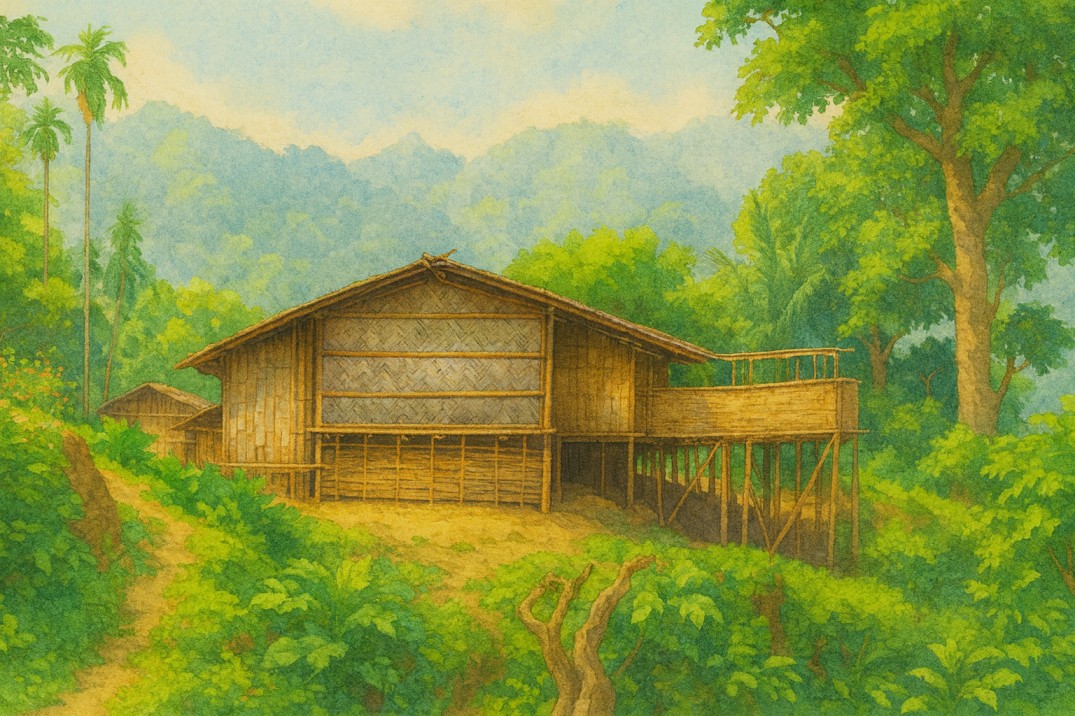
Traditional Mro (Mro) architecture, belonging to one of the oldest indigenous communities of southeastern Bangladesh, reflects a dynamic cultural expression shaped by ecological knowledge, kinship structures, spiritual beliefs, and communal values. Mro houses—referred to as kim—are constructed from bamboo, timber, and thatch, encoding systems of knowledge transmitted across generations. Central architectural zones such as the kimma (private interior) and kim-tom or cholak (public multifunctional area) demonstrate a deep integration of spatial logic with social meaning. Mro architecture functions as a living, ritualized practice that embodies the community’s worldview, environmental ethos, and cultural resilience.
Materials and Building Techniques
The Mro house, or kim, is almost exclusively constructed using organic materials available from the surrounding forest. The house is raised on stilts—a feature that serves both functional and symbolic purposes. Key materials include:
Bamboo: used for flooring, walls, partitions, mats, storage baskets, and even doors.
Timber logs: used for vertical posts and structural support.
Thatch or grass leaves: used for roofing.
Bamboo thongs or rattan: used instead of nails to tie structural elements together.
The widespread use of bamboo is not merely utilitarian; it reflects an ecological ethos, with the forest providing materials for shelter, fuel, food, and everyday domestic needs.
The flooring is particularly remarkable: built on three to four layers of split bamboo and woven grid lattices, it creates a strong, resilient platform that can withstand heavy daily use.
Spatial Composition: The Kimma, Kim-tom, and Char
The architectural vocabulary of the Mro people reflects a deeply layered understanding of space, social order, gender roles, and ecological practicality. Each architectural element within the kim (house) is not just functional but embedded with cultural meanings—often defining who may enter, sleep, or perform certain activities in a space. The names of these spaces are rooted in the Mro language and reflect an indigenous cosmology and way of life shaped by forest environments, communal bonds, and ancestral traditions.
Kimma: the private domain, typically used for sleeping, storing grain, and performing intimate rituals. Entry into the kimma is restricted and can only be accessed through the kim-tom.
Kim-tom or Cholak: the multipurpose communal area where cooking, social interaction, and hospitality take place. It also serves as the space for guest reception and communal sleeping in some contexts.
Char: the open verandah in front of the kim-tom, elevated and accessible via a notched tree trunk ladder. The char is used for food drying, washing, and everyday domestic work.
Taklak: A private room specially constructed with bamboo for elderly men and women. No one else is permitted to sleep here, emphasizing respect and care for elders.
Kimret: An open sleeping space located at one end of the main house. Only men are allowed to sleep here, marking it as a male-designated zone.
Chiyamong: A designated space for guests to sit and sleep when visiting. Hospitality is central to Mro life, and this area reflects that value.
Undong: Situated at the opposite end of the house, this is where unmarried girls or women sleep. Men are strictly prohibited from entering this zone.
Taaping: A raised, clay-smeared hearth constructed like a leveled field bund. A three-legged stove (sikkoya) is placed atop for cooking.
Tuikrok: The corner of the house where drinking water is stored, often in bamboo or clay containers.
Kimplot Riya: A compartment or elevated shelf where agricultural seeds are stored safely for the next sowing season.
Chapam: A bamboo or wooden storage unit specifically used for storing paddy or unhusked rice.
Taaping: A smaller, specially designated stove area built exclusively for the use of husband and wife.
Kimlak: The inner chamber of the house used as the marital bedroom for husband and wife.
Chualak: A space used to store root vegetables like sweet potatoes, pumpkins, and bottle gourds—often suspended for air drying.
Char or Thuluk: An open platform or space used by women during childbirth, usually during nighttime for privacy and cooling.
Donglu or Pongproya: A designated corner or rack outside or near the entrance for keeping sandals, often signifying the boundary between outside and sacred indoor space.
Dong: A carved, inclined ladder made from a single log with notches, used to access the raised floor of the house.
Nangkhor: A specific area used for threshing or processing paddy during the rainy season, often sheltered but with enough ventilation.
Gender and Space
Gender roles within Mro society do not follow the hierarchical, gender-segregated patterns common in many patriarchal systems. Instead, both men and women engage actively in domestic and communal spheres.
Men participate in guest hospitality, cleaning, and sometimes cooking.
Women engage in agriculture, water-carrying, wood collection, and house maintenance.
The kimma is not “the woman’s domain,” nor is the kim-tom a purely masculine or social space. The division is not gendered but functional and ceremonial. Privacy, in Mro society, is demarcated more in terms of insider-outsider relationships rather than male-female binaries.
The Mro House as a Ritual Structure
One of the most striking insights from the research is the ritual significance of architectural spaces. The kim is not just a dwelling—it is a sacred site where both everyday life and spiritual transactions unfold.
Examples of ritual use include:
• Sacrificing chickens or pigs in the kimma to appease ancestral spirits or to ward off illness.
• Making offerings of rice or meat in the kim-tom when the first produce of the year is brought home.
• Hosting go-hotta (cattle sacrifice) events in front of the char for community healing or celebration.
These events transform ordinary household spaces into temporary sacred spaces. The architectural boundaries between sacred and profane are thus fluid and cyclical.
Artifacts and Symbolic Material Culture
Inside the kim, material possessions are few but telling:
• Bamboo baskets are tied to vertical posts and kept above floor level.
• Pots for brewing rice beer (imported from neighboring Bengali markets) are neatly arranged in corners.
• Mats, hewing knives, and mortar-pestles are carefully stored and only brought out when in use.
• Carved bamboo sticks sometimes demarcate zones within the kim-tom, used for seating or sleeping.
There is a clear ethic of aesthetic minimalism—one that reflects both ecological adaptation and Buddhist influence, emphasizing impermanence, utility, and simplicity.
Settlement Patterns and Social Order
Mro hamlets (paras) appear randomly scattered across hilltops, but a deeper social logic underpins their spatial arrangement. Proximity to water sources, forest access, and clan affiliations determine where houses are built. In times of ecological stress (such as the drying of a jhiri or stream), entire hamlets may shift location.
Within the hamlet:
• Houses are built in a uniform typology, with no display of wealth or hierarchy.
• Even the karbari’s house mirrors the others, indicating the egalitarian structure of Mro society.
• Single-block houses are observed among elderly or single-member families, reflecting adaptive flexibility in house design.
Architecture and Cultural Resilience
With the slow advance of roads, market access, and NGO activity, changes are becoming evident. In some hamlets, corrugated tin roofs, cement floors, or plastic partitions are replacing traditional materials. However, these imported elements often clash with the Mro spatial and ecological logic.
While modernization brings undeniable conveniences, it also poses serious threats:
• Disruption of sustainable material cycles
• Erosion of communal construction practices
• Loss of spiritual and symbolic meaning of space
• Weakening of ritual life embedded in the architecture
The mro thinks that the new houses are not for their hearts, because they are not alive.
The Mro architecture represents a dynamic system of knowledge in which ecological understanding, social cohesion, and ritual practice are inseparably intertwined. The spatial and material logic of the kim exemplifies how indigenous communities create built environments that are simultaneously functional, symbolic, and culturally resonant. Preserving and documenting this heritage is essential for sustaining Mro cultural identity and for recognizing the sophistication of traditional knowledge systems in the hills of southeastern Bangladesh.
পাহাড়ের সঙ্গে বসতি: ম্রোদের প্রথাগত স্থাপত্যে সংস্কৃতির প্রকাশ
দক্ষিণ-পূর্ব বাংলাদেশের প্রাচীনতম আদিবাসী গোষ্ঠীগুলোর অন্যতম ম্রো সম্প্রদায়ের প্রথাগত স্থাপত্য একটি জীবন্ত সাংস্কৃতিক প্রকাশ—যা গড়ে উঠেছে তাদের পরিবেশ-জ্ঞান, আত্মীয়তা কাঠামো, আধ্যাত্মিক বিশ্বাস ও সামষ্টিক মূল্যবোধের মধ্য দিয়ে। ম্রো বাড়ি—যাকে ‘কিম’ বলা হয়—তৈরি হয় বাঁশ, কাঠ ও খড়ের মতো প্রাকৃতিক উপাদান দিয়ে। এসব নির্মাণে নিহিত থাকে প্রজন্ম থেকে প্রজন্মে প্রেরিত জ্ঞানের এক জীবন্ত ধারা। স্থাপত্যের কেন্দ্রীয় অংশ—কিম্মা (গোপন অভ্যন্তর) ও কিম-তোম বা চোলাক (সামাজিক বহুমুখী স্থান)—প্রমাণ করে কীভাবে স্থানের বিন্যাস সামাজিক অর্থ ও জীবনের ভাবনার সঙ্গে গভীরভাবে জড়িত। ম্রো স্থাপত্য কেবল একটি আশ্রয় নয়; এটি এক জীবন্ত, আচারনির্ভর প্রক্রিয়া—যার ভেতর প্রতিফলিত হয় তাদের জীবনদৃষ্টি, পরিবেশনৈতিক চেতনা ও সাংস্কৃতিক স্থিতিশীলতা।
উপকরণ ও নির্মাণপ্রণালী
ম্রোদের ঘর বা কিম সম্পূর্ণভাবে গড়ে ওঠে আশেপাশের অরণ্য থেকে সংগৃহীত জৈব উপাদান দিয়ে। ঘর সাধারণত খুঁটির ওপর উঁচু করে তৈরি করা হয়—যা একদিকে বাস্তব প্রয়োজনে, অন্যদিকে প্রতীকী অর্থে গুরুত্বপূর্ণ। ব্যবহৃত প্রধান উপকরণগুলো হলো—
বাঁশ: মেঝে, দেয়াল, বিভাজন, মাদুর, সংরক্ষণ ঝুড়ি ও দরজায় ব্যবহৃত হয়।
কাঠের গুঁড়ি: স্তম্ভ ও গাঠনিক সহায়তায় ব্যবহৃত হয়।
খড় বা ঘাসের পাতা: ছাউনি বা ছাদের উপকরণ।
বাঁশের ফিতা বা বেত: কাঠামোর অংশগুলো একত্র বাঁধতে ব্যবহৃত হয়, পেরেকের বিকল্প হিসেবে।
বাঁশের ব্যবহার কেবল সুবিধাজনক বলেই নয়; এটি একটি পরিবেশ-নৈতিক দৃষ্টিভঙ্গির বহিঃপ্রকাশ—যেখানে বনই জীবনধারার কেন্দ্র, আশ্রয় থেকে খাদ্য পর্যন্ত সব কিছুর উৎস।
মেঝে বিশেষভাবে উল্লেখযোগ্য—তিন থেকে চার স্তরের কাটা বাঁশ ও বোনা জালের গঠন এটিকে করে তোলে স্থিতিশীল ও দীর্ঘস্থায়ী, যা প্রতিদিনের ভারী ব্যবহার সহ্য করতে সক্ষম।
স্থানবিন্যাস: কিম্মা, কিম-তোম ও চার
ম্রো স্থাপত্যের শব্দভাণ্ডার তাদের গভীর সামাজিক, পরিবেশগত ও আধ্যাত্মিক বোঝাপড়ার প্রতিফলন। প্রতিটি স্থানের নিজস্ব নাম ও তাৎপর্য আছে—যা শুধুমাত্র কার্যকর নয়, সামাজিক ও ধর্মীয় অর্থেও নির্দিষ্ট।
কিম্মা: গোপন অভ্যন্তরীণ স্থান—ঘুমানো, ধান সংরক্ষণ ও ব্যক্তিগত আচার-অনুষ্ঠানের জন্য ব্যবহৃত হয়। এতে প্রবেশ কেবল কিম-তোমের মাধ্যমে সম্ভব।
কিম-তোম বা চোলাক: বহুমুখী সামাজিক স্থান—এখানেই রান্না, অতিথি আপ্যায়ন, গল্পগুজব ও কখনও সামষ্টিকভাবে ঘুমানোর ব্যবস্থা থাকে।
চার: ঘরের সামনের খোলা বারান্দা, সাধারণত একটি কাটা গাছের কাণ্ডের মই দিয়ে ওঠা যায়। এটি শস্য শুকানো, কাপড় ধোয়া ও দৈনন্দিন কাজের জায়গা।
তাকলাক: বয়স্ক নারী-পুরুষদের জন্য বিশেষ ঘর, অন্য কেউ এখানে ঘুমাতে পারে না—যা প্রবীণদের প্রতি শ্রদ্ধার প্রকাশ।
কিমরেত: ঘরের এক প্রান্তে খোলা ঘুমানোর স্থান, পুরুষদের জন্য নির্দিষ্ট।
চিয়ামং: অতিথিদের বসা ও ঘুমানোর নির্দিষ্ট স্থান—ম্রো আতিথেয়তার প্রতীক।
উন্দং: অবিবাহিত মেয়েদের ঘুমানোর ঘর—পুরুষদের প্রবেশ নিষিদ্ধ।
তাপিং: উঁচু, কাদা মাখানো চুলা, যার ওপরে তিনপায়ের চুলা বা সিক্কোইয়া বসানো হয়।
তুইক্রক: পানির সংরক্ষণস্থল—বাঁশ বা মাটির কলসে রাখা হয়।
কিমপ্লট রিয়া: কৃষি বীজ সংরক্ষণের জন্য উঁচু তাক বা ভাগ।
ছাপাম: পাটিশালী ধান রাখার বিশেষ কাঠ বা বাঁশের ভাণ্ডার।
কিমলাক: দম্পতির শয়নকক্ষ।
চুয়ালাক: মূল জাতীয় সবজি যেমন আলু, কুমড়া, লাউ ইত্যাদি ঝুলিয়ে রাখার জায়গা।
চার বা থুলুক: প্রসবকালীন নারীরা ব্যবহার করেন—রাতে গোপন ও শীতলতার জন্য উপযুক্ত।
দংলু বা পংপ্রয়া: দরজার বাইরে জুতা রাখার কোণ—বাইরের ও ভেতরের পবিত্রতার সীমারেখা।
দং: কাটা গাছের কাণ্ড থেকে বানানো খোদাইকৃত মই, ঘরে ওঠার জন্য ব্যবহৃত।
নাংখুর: বৃষ্টির মৌসুমে ধান মাড়াইয়ের জন্য ব্যবহৃত ছাউনি দেওয়া খোলা স্থান।
লিঙ্গ ও স্থান
ম্রো সমাজে লিঙ্গভিত্তিক বিভাজন তেমন প্রখর নয়। পুরুষ ও নারী উভয়েই গৃহস্থালি ও সামষ্টিক জীবনের কাজে সমান ভূমিকা রাখেন।
- পুরুষেরা অতিথি আপ্যায়ন, ঘর পরিষ্কার ও কখনও রান্নার কাজেও অংশ নেয়।
- নারীরা কৃষিকাজ, পানি ও জ্বালানি বহন, ঘর মেরামত—সবকিছুতে সক্রিয়।
এখানে কিম্মা নারীর গৃহ নয়, আর কিম-তোমও কেবল পুরুষের স্থান নয়। স্থানবিন্যাস লিঙ্গ নয়, বরং কার্য ও আচারিক ব্যবহারের ভিত্তিতে নির্ধারিত। গোপনতা বা “প্রাইভেসি” এখানে পুরুষ-নারী ভেদে নয়, বরং ভেতরের ও বাইরের সম্পর্কের সীমারেখায় সংজ্ঞায়িত।
আচারিক স্থাপনা হিসেবে ম্রো ঘর
ম্রো ঘর কেবল বসবাসের জায়গা নয়; এটি একটি পবিত্র পরিসর, যেখানে দৈনন্দিন জীবন ও আধ্যাত্মিক অনুশীলন মিলেমিশে থাকে।
কিছু আচারিক ব্যবহারের উদাহরণ:
- রোগ বা অশুভ শক্তি দূর করতে পূর্বপুরুষের আত্মাকে তুষ্ট করতে কিম্মায় মুরগি বা শূকর বলি দেওয়া হয়।
- নতুন ফসল ঘরে তোলার সময় কিম-তোমে ভাত বা মাংস উৎসর্গ করা হয়।
- সম্প্রদায়িক আরোগ্য বা উৎসব উপলক্ষে চারের সামনে গো-হট্টা (গরু বলি) অনুষ্ঠিত হয়।
এভাবে ঘরের সাধারণ স্থানগুলি সময়বিশেষে রূপ নেয় পবিত্র পরিসরে—যেখানে আচার ও দৈনন্দিনতা একাকার হয়ে যায়।
বস্তুসংস্কৃতি ও প্রতীকী রূপ
ঘরের ভেতরে বস্তু অল্প, কিন্তু প্রতিটি গভীর তাৎপর্যপূর্ণ—
- বাঁশের ঝুড়িগুলো খুঁটির সঙ্গে ঝুলিয়ে রাখা হয়, যাতে মেঝে ভিজে না।
- চালের মদ রাখার পাত্র কোণায় সাজিয়ে রাখা হয়।
- মাদুর, দা, ও খুন্তি-উখার মতো জিনিস ব্যবহার শেষে নির্দিষ্ট জায়গায় গুছিয়ে রাখা হয়।
- কখনও কিম-তোমে বাঁশের খোদাই করা দণ্ড বসিয়ে বসার বা ঘুমানোর স্থান নির্ধারণ করা হয়।
এই সরল নান্দনিকতা এক ধরনের ‘অলংকারহীন সৌন্দর্যবোধ’ প্রকাশ করে—যা প্রকৃতি ও বৌদ্ধ ভাবনার প্রভাবমিশ্রিত, অস্থায়িত্ব ও উপযোগিতাকে মূল্য দেয়।
বসতি বিন্যাস ও সামাজিক কাঠামো
ম্রো পাড়াগুলো বাইরে থেকে এলোমেলো মনে হলেও, তার পেছনে রয়েছে পরিবেশ ও সামাজিক যুক্তি। পানির উৎস, বনপ্রবেশের সুবিধা, ও আত্মীয়তার ভিত্তিতে ঘরবাড়ি স্থাপন করা হয়। জিরির পানি শুকিয়ে গেলে পুরো পাড়া অন্যত্র সরে যায়—প্রকৃতির সঙ্গে তাল মিলিয়ে টিকে থাকার প্রমাণ এটি।
- সব ঘর প্রায় একই রকম, ধন বা মর্যাদার কোনো বাহ্যিক পার্থক্য নেই।
- এমনকি কার্বারী (পাড়ার নেতা)-র ঘরও অন্যদের মতোই—সমতার প্রতীক।
- একক পরিবার বা বৃদ্ধদের জন্য ছোট একক ঘরও দেখা যায়—যা অভিযোজনক্ষমতার নিদর্শন।
স্থাপত্য ও সাংস্কৃতিক স্থিতিশীলতা
বর্তমানে রাস্তাঘাট, বাজার ও এনজিও কার্যক্রমের প্রভাবে পরিবর্তন আসছে। কিছু ঘরে টিনের ছাদ, সিমেন্টের মেঝে বা প্লাস্টিকের বিভাজন দেখা যায়। তবে এসব আধুনিক উপাদান ম্রোদের স্থানিক যুক্তি ও নান্দনিক ধারার সঙ্গে প্রায়ই বেমানান হয়ে পড়ে।
আধুনিকতার সুবিধা থাকলেও এর ফলে দেখা দিচ্ছে কিছু গভীর সংকট—
- টেকসই উপকরণচক্রের ভাঙন
- সামষ্টিক নির্মাণচর্চার বিলোপ
- স্থানের প্রতীকী ও আধ্যাত্মিক অর্থ হারিয়ে যাওয়া
- আচারভিত্তিক জীবনের দুর্বলতা
ম্রোরা বলেন নতুন ঘরগুলোতে আমাদের মন টেকে না, কারণ ওগুলোতে কোনো প্রাণ নেই।
ম্রো স্থাপত্য হলো এমন এক জীবন্ত জ্ঞানতন্ত্র, যেখানে পরিবেশবোধ, সামাজিক ঐক্য ও আচারিক জীবন একে অপরের সঙ্গে গভীরভাবে জড়িত। তাদের কিম কেবল একটি ঘর নয়—এটি এক সমন্বিত সাংস্কৃতিক ভাষা, যেখানে কার্যকারিতা, প্রতীকবোধ ও নান্দনিকতা মিলেমিশে আছে। এই ঐতিহ্য সংরক্ষণ ও নথিবদ্ধ করা শুধু স্থাপত্যরক্ষার কাজ নয়, বরং ম্রোদের সাংস্কৃতিক পরিচয় টিকিয়ে রাখার অন্যতম শর্ত এবং বাংলাদেশের পার্বত্য অঞ্চলের প্রাচীন জ্ঞানব্যবস্থার মর্যাদা স্বীকৃত করার অপরিহার্য পদক্ষেপ।